
APAA’s Top Picks From Art Basel 2026
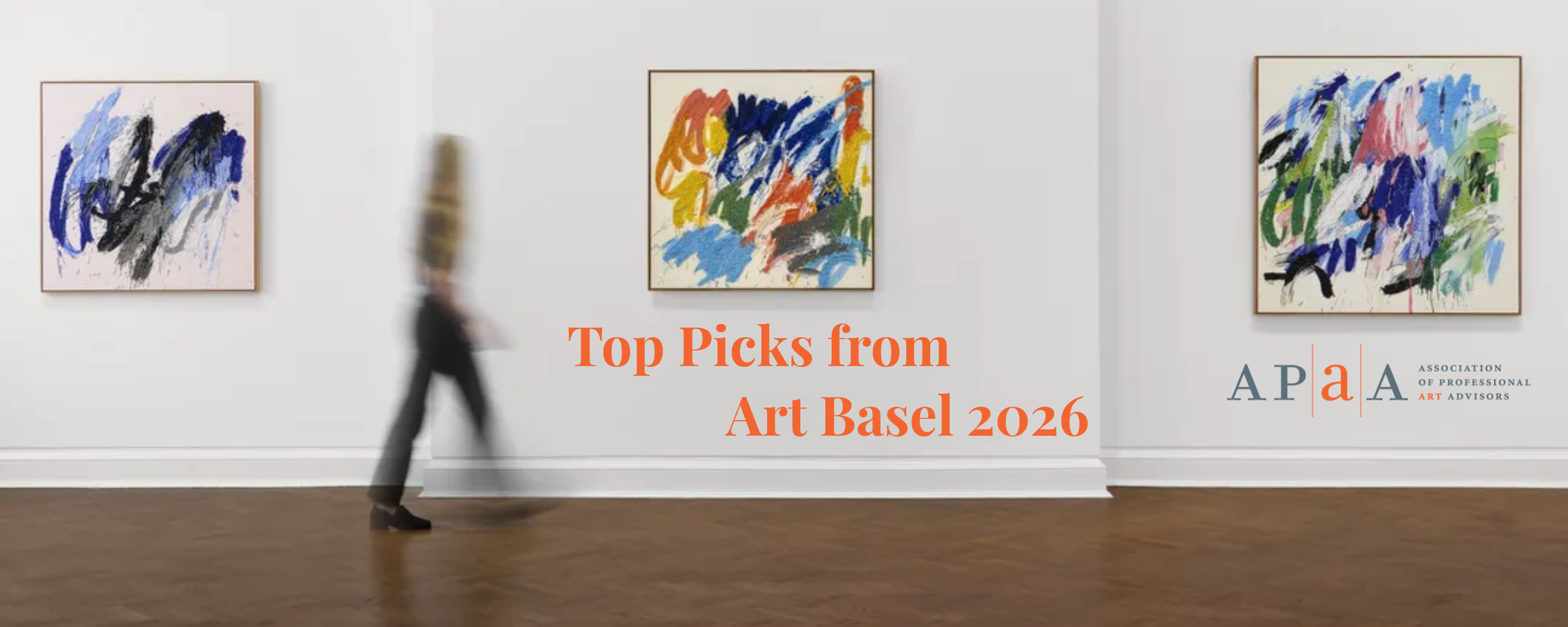
Liza Lou, Analepsis, 2025, Oil paint and glass beads on stretched canvas, 103.3 × 106 cm (40.66 × 41.73 in). Courtesy of Thaddeus Ropac.
Art Basel returns to Switzerland with invitation-only Unlimited Sector opening on June 15th, VIP Previews from June 16th-18th, and public viewing beginning June 18th through Sunday, June 21st. The fair features over 200 galleries presenting more than 4,000 artists spanning five continents. Many high-quality exhibitions take place concurrently in and around Basel, creating a region-wide art week.
Thank you to our APAA advisors for carefully selecting exceptional works on view at the fair.
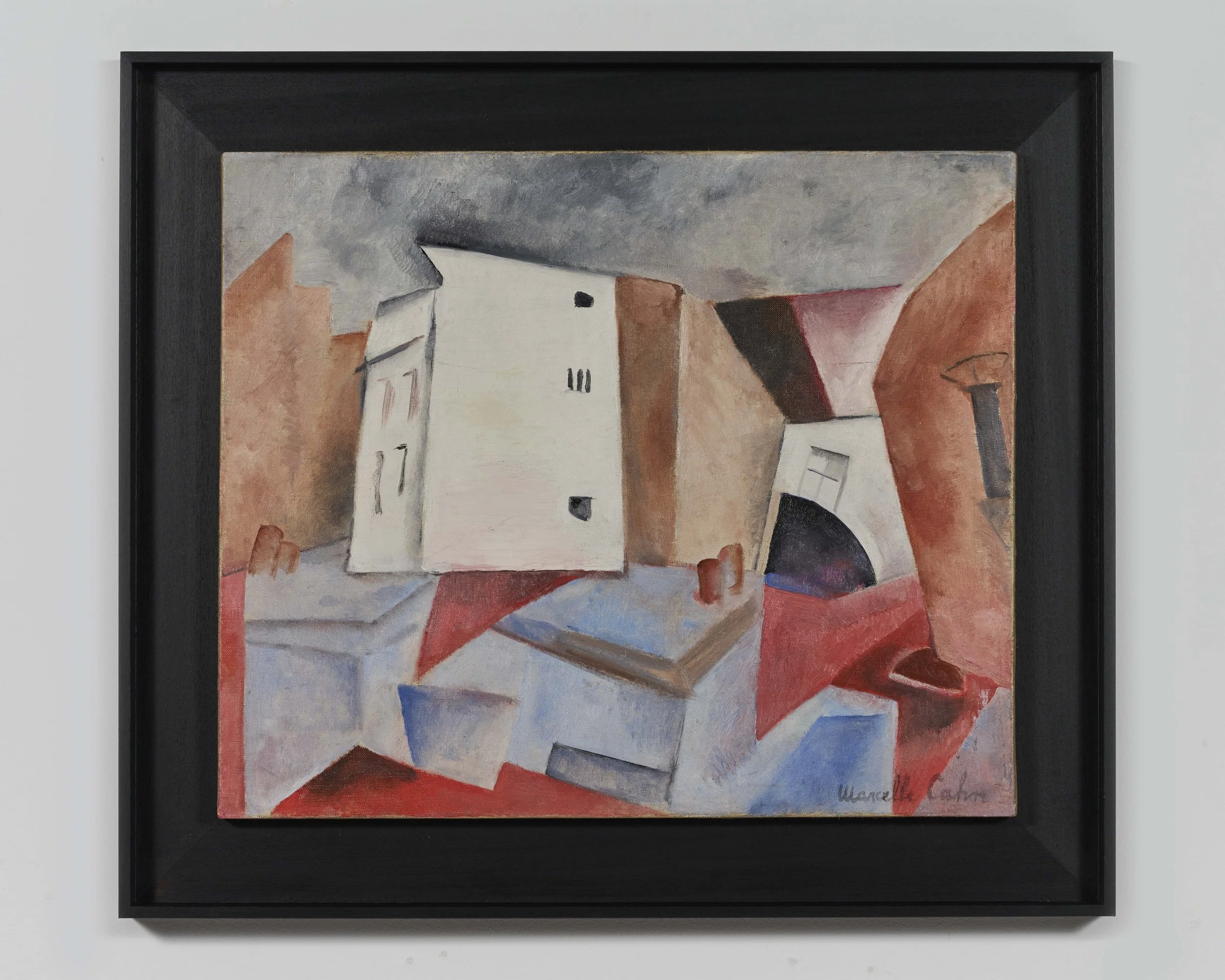
Marcelle Cahn, Les Toits (the Roofs), ca. 1925
“Marcelle Cahn was important because she helped bridge several movements in modern art—from Cubism and Purism to geometric abstraction and Constructivism—and became one of the notable women artists working within the European abstract avant-garde. She was associated with the abstract artists' groups Cercle et Carré and Abstraction-Création, both of which played important roles in the development of non-representational art in the 20th Century.
Her Purist paintings are especially significant. Between about 1925 and 1930, after studying with Amédée Ozenfant and Fernand Léger in Paris, Cahn adopted the principles of Purism: clear geometric structures, precise outlines, smooth surfaces, and carefully ordered compositions. Her Purist works often depicted everyday objects, land-or cityscapes, and still-lifes, simplifying them into harmonious, architectural forms. This period had a lasting influence on her later art and helped shape her move towards pure abstraction with compositions of lines, shapes, collages, and spatial constructions. These works contributed to the evolution of European abstract art after the Second World War. As often female artists hardly get credit for that, often only later in life or posthumously.”
Oil on canvas
46 x 55 cm.
Presented by Galerie Jocelyn Wolff
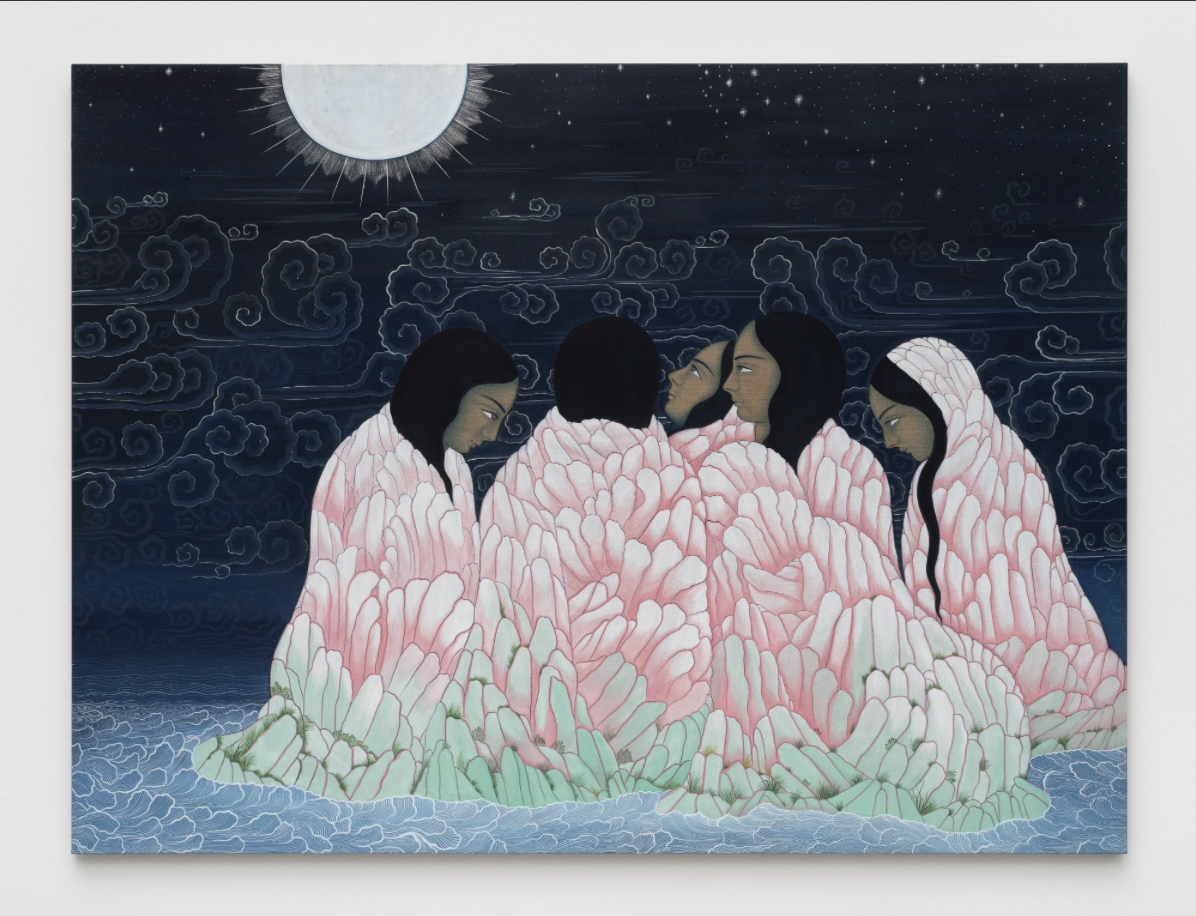
Rupy C. Tut, Gathering in the Night, 2026
“I find the paintings of Rupy C. Tut deeply moving. Their beauty always strikes me first, but it is the depth of feeling behind them that keeps drawing me back. You can feel the immense care, time, and dedication that go into each work, from the making of her own pigments to the meticulous attention given to every detail.
Her paintings emerge from a space where personal and collective histories meet. They speak of heritage, identity, and womanhood with a quiet strength, leaving me wanting to dive deeper into the stories unfolding within each image.
Drawing on traditional Indian painting techniques while reinterpreting them through a contemporary lens, she beautifully bridges past and present. The result is a body of work that feels both timeless and deeply personal, carrying memory, resilience, and belonging with remarkable tenderness.”
– Laura De Beir (Fine Art Consult)
152.4 x 203.2 x 3.8 cm
Handmade pigments and shell silver on linen
Presented by Jessica Silverman Gallery
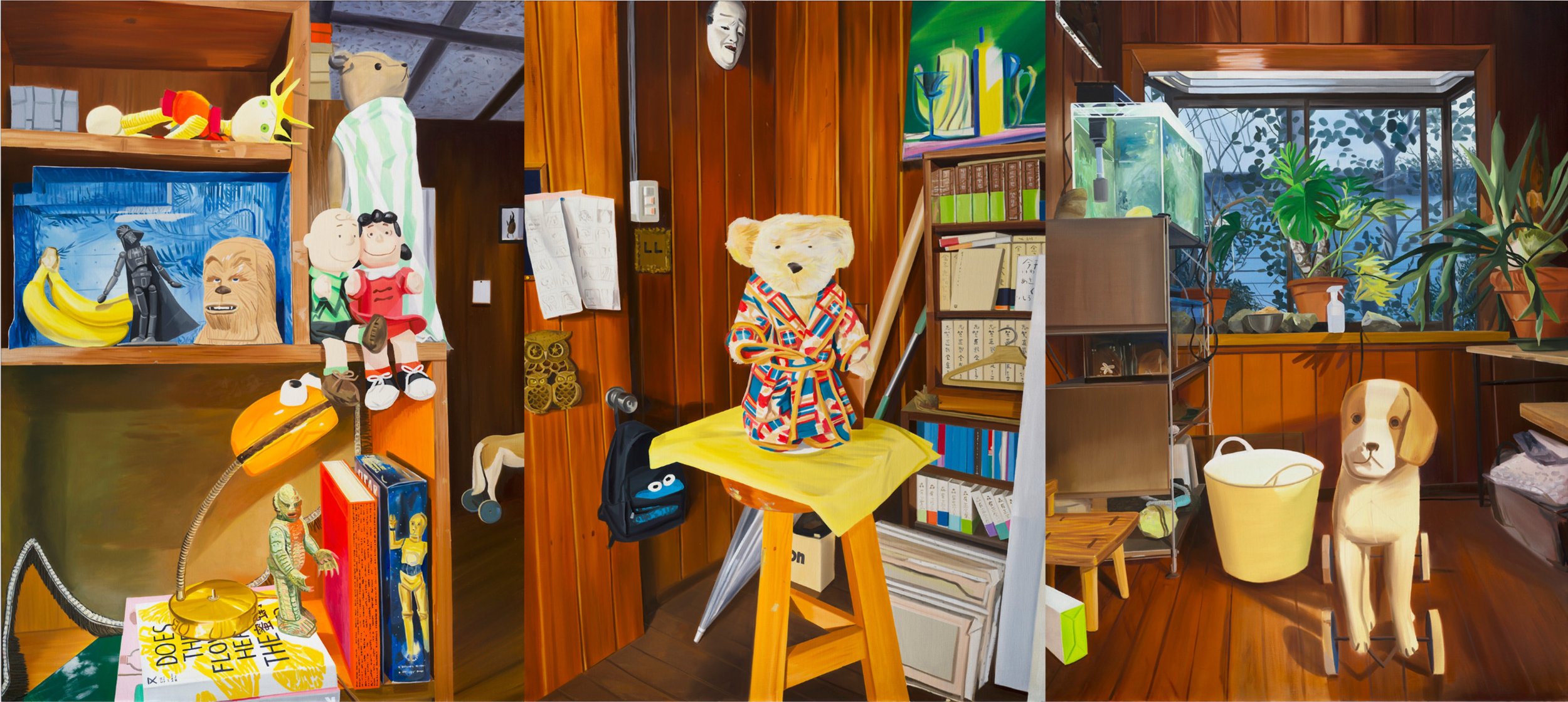
Ulala Imai, STUDIO, 2026
“Ulala Imai, a third-generation artist in her family, translates the ordinary objects of everyday life into tender, atmospheric tableaux. Studio is an ambitiously scaled triptych that pulls back the curtain on Imai's workspace in her childhood home in Kanagawa, Japan, where she lives today.
Imai's cast of recurring characters — from Charlie Brown to Chewbacca — is sourced from her immediate surroundings and takes center stage. Rendered in glowing strokes of oil paint, they teem with life and occupy the composition with a strikingly sentient presence.
At once a panoramic landscape, a still life, and an intimate self-portrait, Studio is a portal into Imai's world, a space where the artist's creative and domestic realms merge and spill out from the canvas into reality itself.”
Oil on canvas
102 x 76 ⅜ inches (each panel)
102 x 259 inches (overall)
Presented by Xavier Hufkens, Karma, and Nonaka-Hill for Art Basel Unlimited
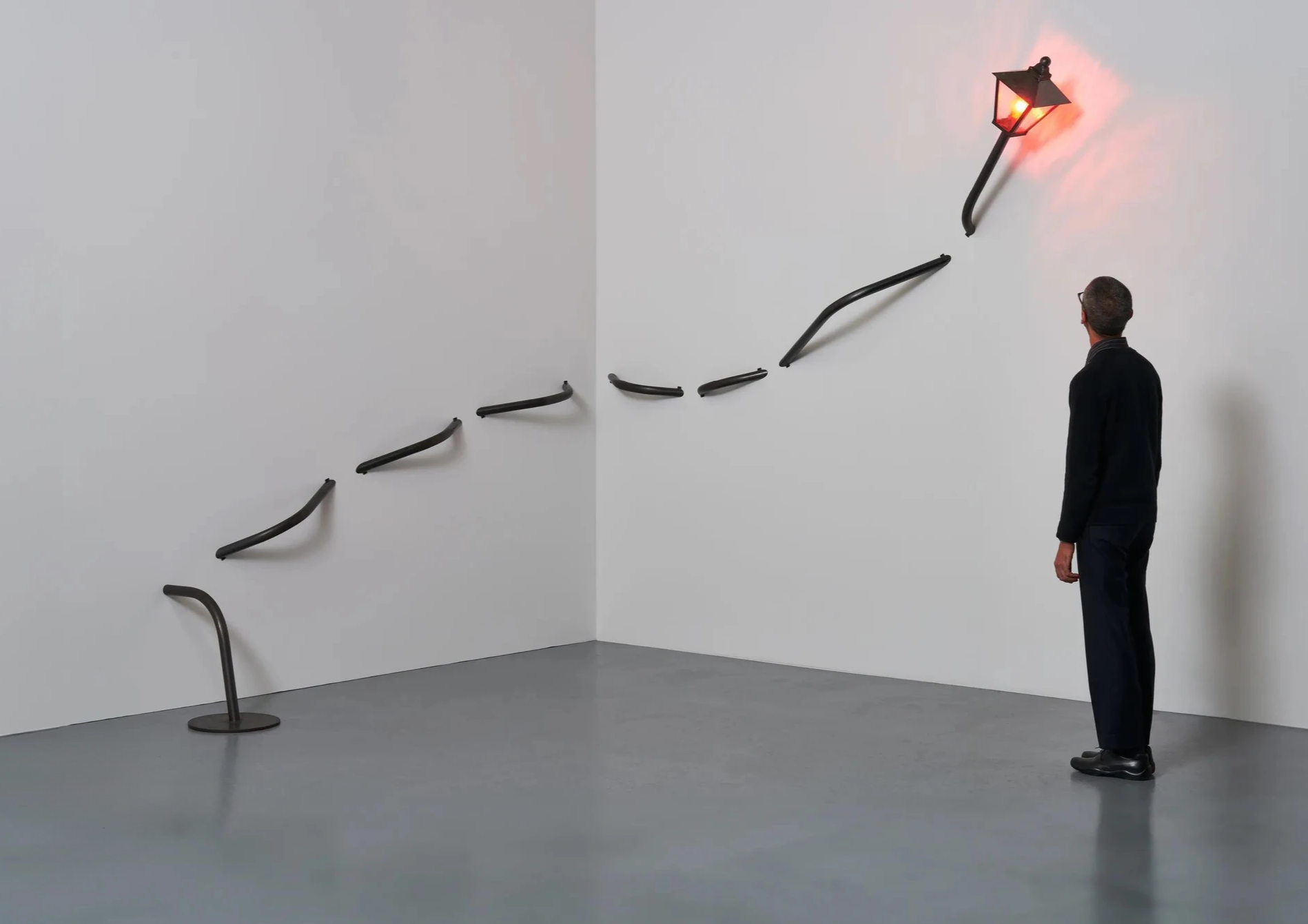
Martin Kippenberger, Untitled, 1989-1990
“Martin Kippenberger’s art was an extension of his outrageous, provocative persona. Prolific and diverse in his mediums, a throughline between his works is a humorous, yet bitter commentary on the modern world and artists’ place in it. Untitled (1989–1990) is an example of his “drunk streetlamp” series, an iconic motif that became a stand-in for the self for the artist, who was often criticized for his drinking habits. The playful installation surreally visualizes drunken dizziness impacting an inanimate object. It’s creative, funny, impressive in scale, and captures the spirit of Kippenberger, while also prompting reflection on the streetlamp’s significance in fostering the nocturnal city life depicted in the late 19th and early 20th century by the great Surrealists, flâneurs, and artists on the precipice of modernity.”
Iron, glass, light bulb, cable, 8 parts
Ed. of 3 unique versions
Dimensions variable
Presented by Hauser & Wirth
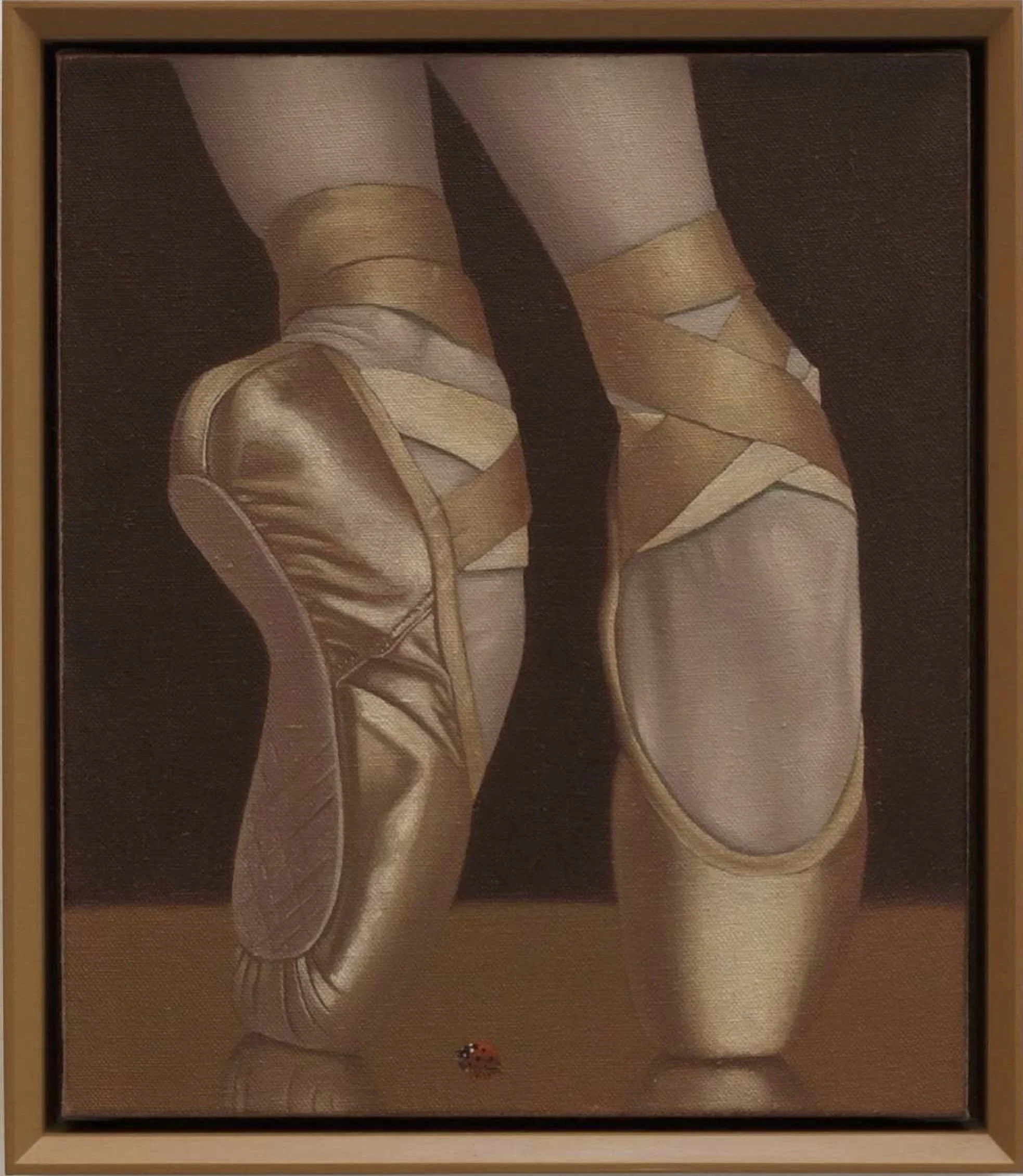
Patrizio di Massimo, Insteps and Ladybird (Orange), 2026
“Italian artist Patrizio di Massimo creates meticulously rendered, figurative paintings that look back to Old Master techniques while addressing contemporary identity, desire, and theater. His work often isolates human limbs, clothing folds, or domestic scenes against dark, dramatic backgrounds, evoking a tense, surreal intimacy reminiscent of Magritte or Caravaggio. Painted with extraordinary technical precision on linen, this small-scale work focuses intensely on the strained, elegant architecture of a ballerina's feet en pointe. The shimmering, satin texture of the golden- orange ribbons contrasts sharply with the deep, shadow-heavy background. At the very bottom, a tiny, hyper-real ladybird crawls near the shoe's reflection, introducing an element of quiet tension and playful surrealism to an otherwise classical study of form.”
Oil on linen
13 ¾ x 11 13/16 inches
15-1/8 x 13-3/16 x 2-1/2 inches framed
Presented by GióMARCONI
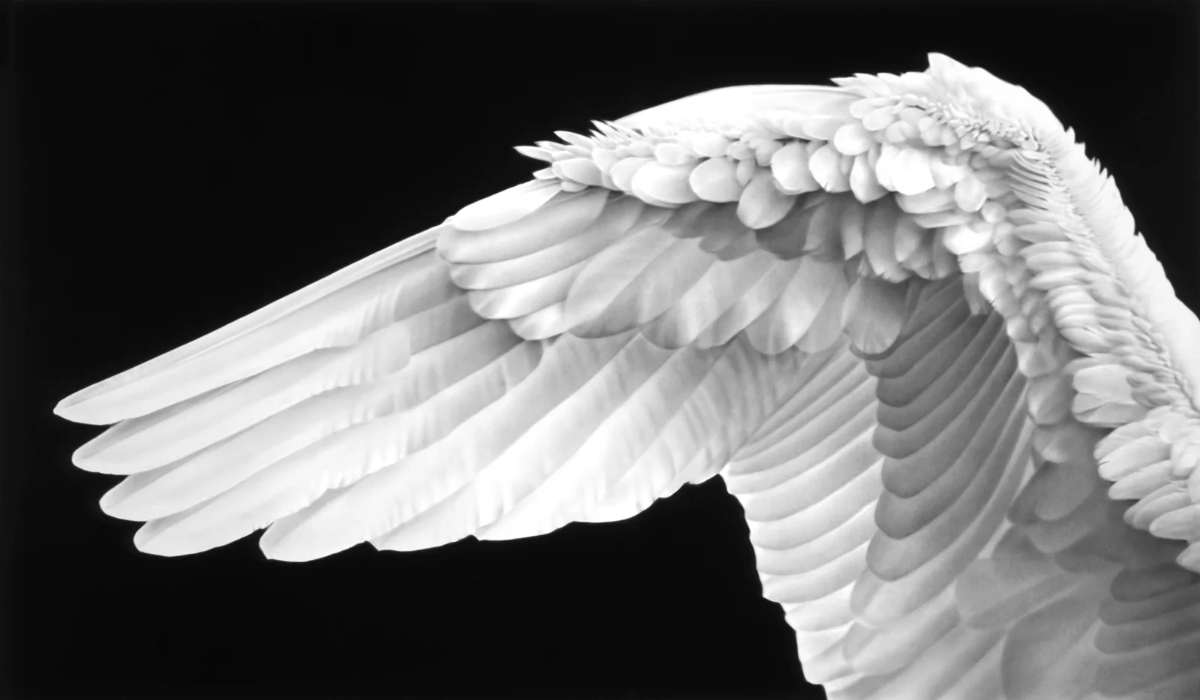
Robert Longo, Untitled (The Messenger, for Georg Baselitz), 2026
“This arresting image of a cropped swan wing is Robert Longo’s remarkably poignant tribute to the recently deceased German artist Georg Baselitz. Rendered in his signature large-scale charcoal on paper, the work radiates the lushness and virtuosity for which Longo is celebrated. Every feather, shadow, and delicate curve stands as a testament to his extraordinary draftsmanship. The swan, an eternal symbol of grace and transcendence, serves as a powerful elegy, and is a fitting homage from one artist to another.”
Charcoal on mounted paper
70 × 120 inches
177.8 × 304.8 cm
Presented by Thaddaeus Ropac
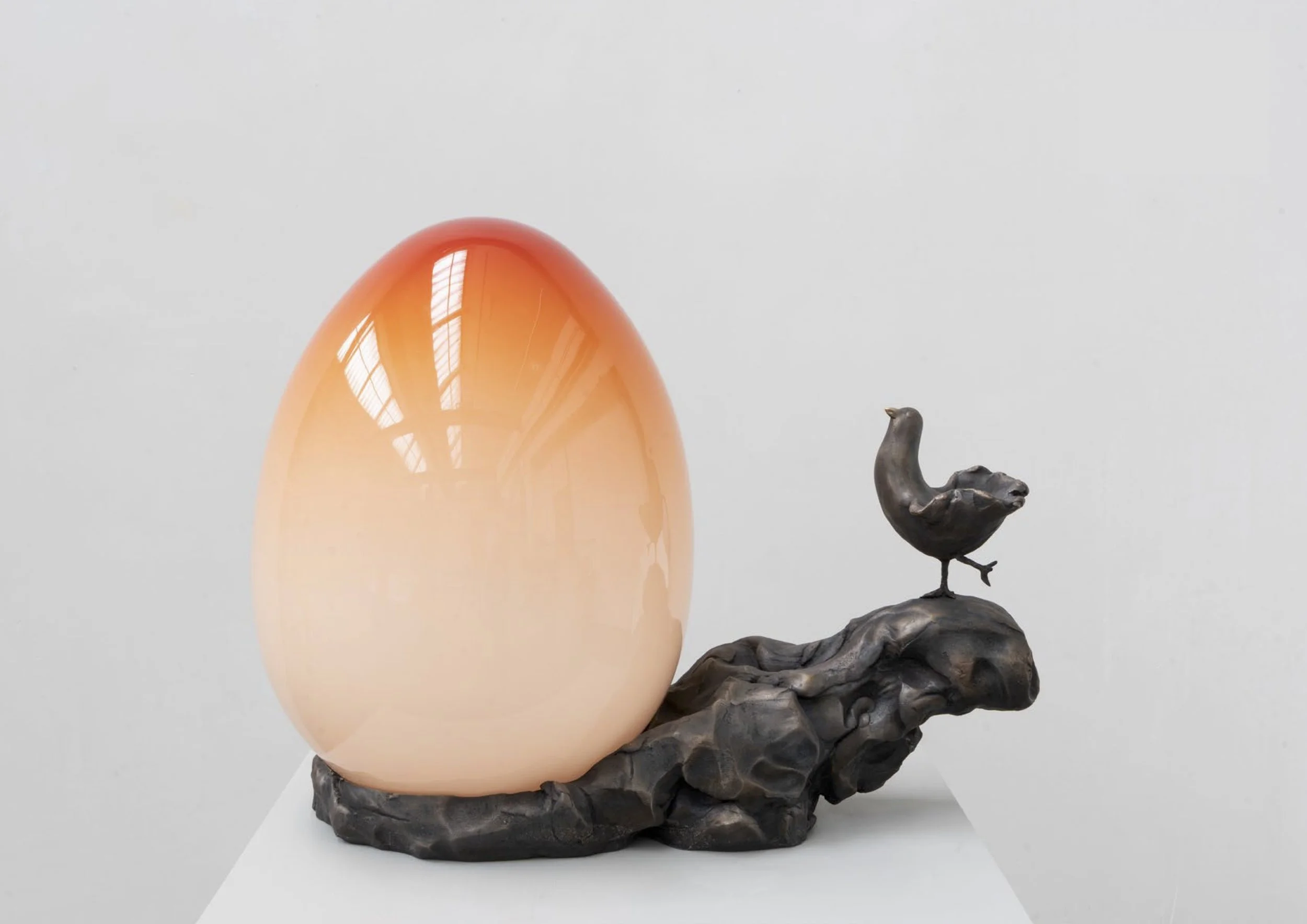
Urs Fischer, Bird Lamp, 2026
“Swiss-born artist Urs Fischer is known for his subversive, humorous, and deeply inventive approach to sculpture and installation. His practice continuously transforms everyday objects into something uncanny, frequently using scale shifts, unexpected material combinations, and themes of transformation or decay to challenge our perception of domestic life. In Bird Lamp, Fischer cheekily merges high-concept sculpture with functional domesticity. A highly polished, smooth blown-glass egg—glowing with a radiant, sunset-orange gradient—is cradled by a rough, craggy, biomorphic bronze base. Perched on the edge of this elemental, rock-like structure is a small, cast-bronze bird that looks ready to take flight. The work acts as a witty, playful monument that collapses the boundaries between fine art and interior decor.”
Blown glass, bronze, electric device
55.1 x 72.2 x 40.4 cm
21 5/8 x 28 3/8 x 15 7/8 inches
Edition of 5 plus 2 artist’s proofs
Presented by The Modern Institute
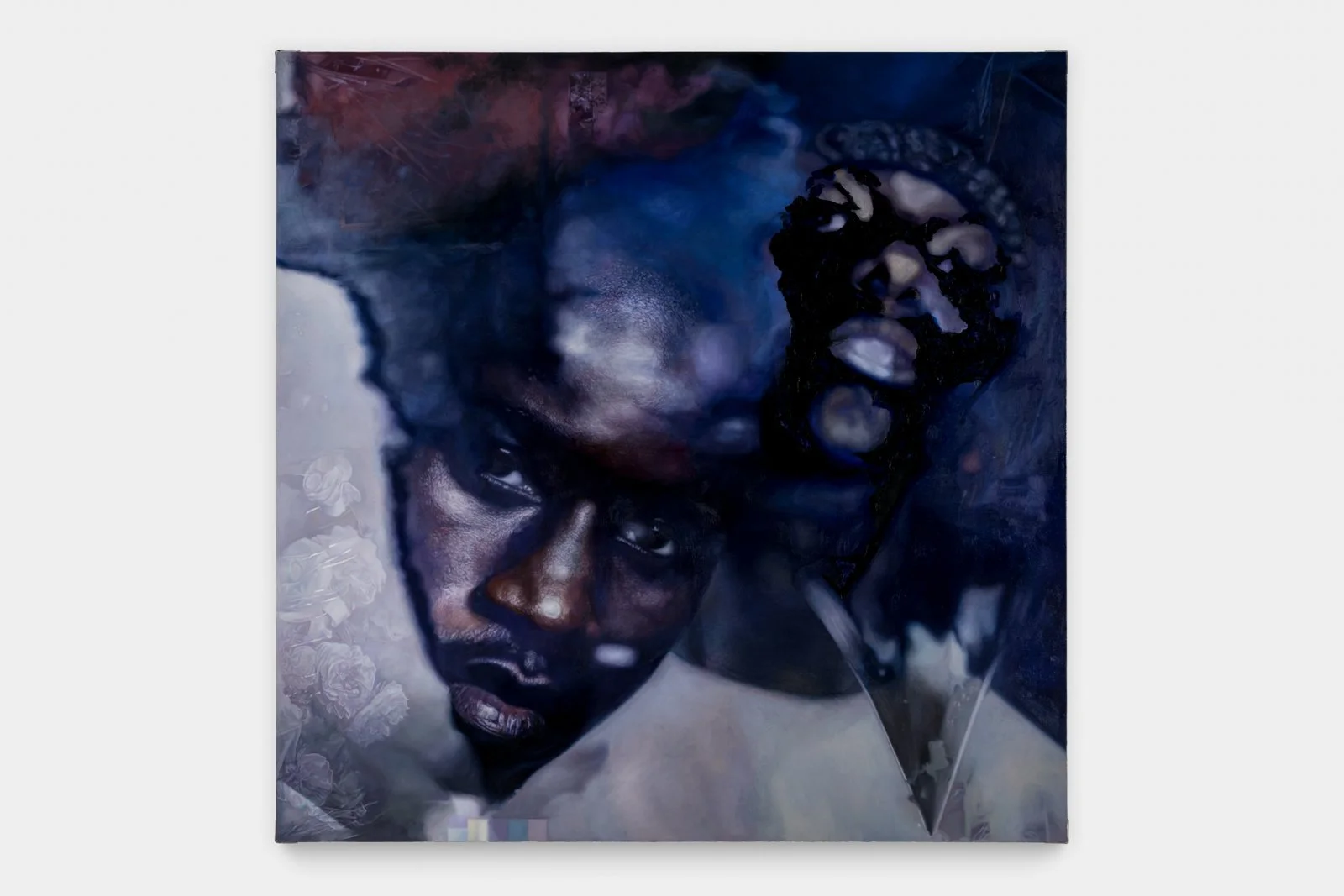
Arthur Jafa, Infamous, 2026
“The show by Richard Prince and Arthur Jafa at Fondazione Prada in Venice was on everyone’s lips during this year’s Biennale. It’s no wonder that any gallery with works by either artist brought them to Basel, hoping to benefit from the Venice effect. This particular painting—clearly made by the artist’s assistants—is a good example of Arthur Jafa’s practice, which is more “commercial” and accessible.”
Oil on canvas
152.4 x 152.4 cm
60 x 60 inches
Presented by Sadie Coles
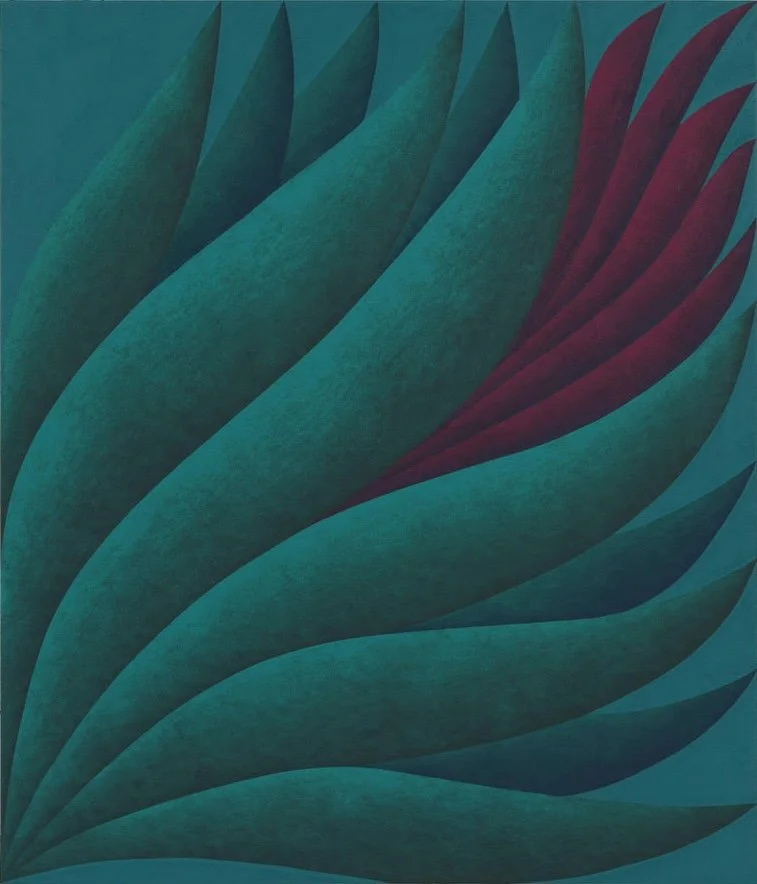
Corydon Cowansage, Budding (Turquoise and Magenta), 2025
“Corydon Cowansage creates large-scale paintings that dramatically zoom in on the natural world, inflating plants, rocks, and biological forms into surreal, enveloping architectures. Her practice plays with strange perspectives, deep shadows, and repetitive forms to distort our sense of scale. This piece uses an intensely saturated, high-contrast palette where deep turquoise blades part to reveal a hidden, glowing magenta core. The clean, curving lines and velvet-smooth gradients create a pulsing, hypnotic sense of growth that feels beautifully alien and claustrophobic all at once.”
Acrylic on canvas
178 x 152.5 cm
70 x 60 inches
Presented by Kaufmann Repetto
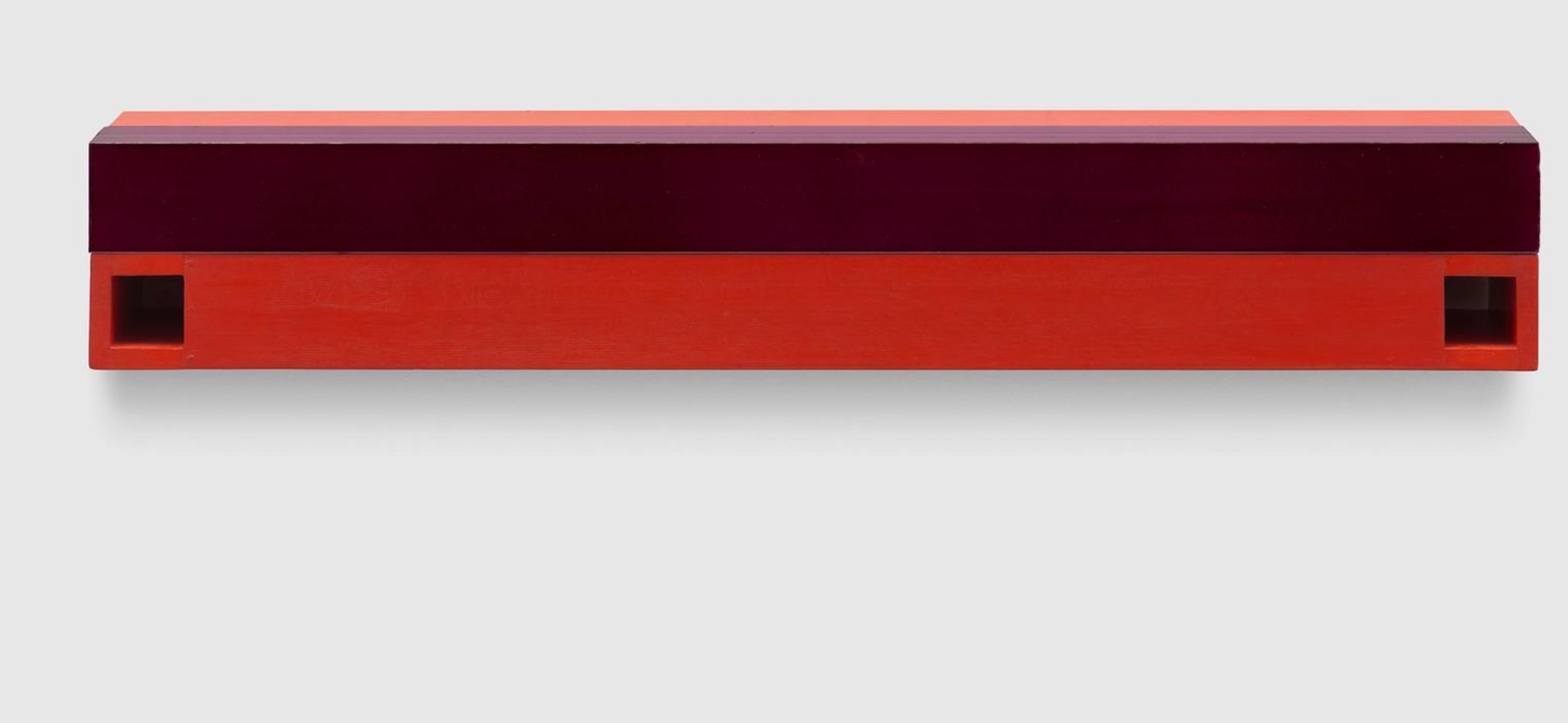
Donald Judd, Untitled, 1963
“In 1963, Judd transitioned his studio practice from making two-dimensional paintings to three-dimensional objects. He chooses to make sculpture utilizing cadmium red, which would be his signature hue carried throughout his career. This masterful early object was included in the artist’s pivotal 2020 retrospective at MoMA.”
Purple lacquer on aluminum and light cadmium red oil on wood
5 1/4 x 32 3/4 x 5 1/8 inches
Presented by David Zwirner
