
APAA’s Top Picks From Art Basel Paris 2026
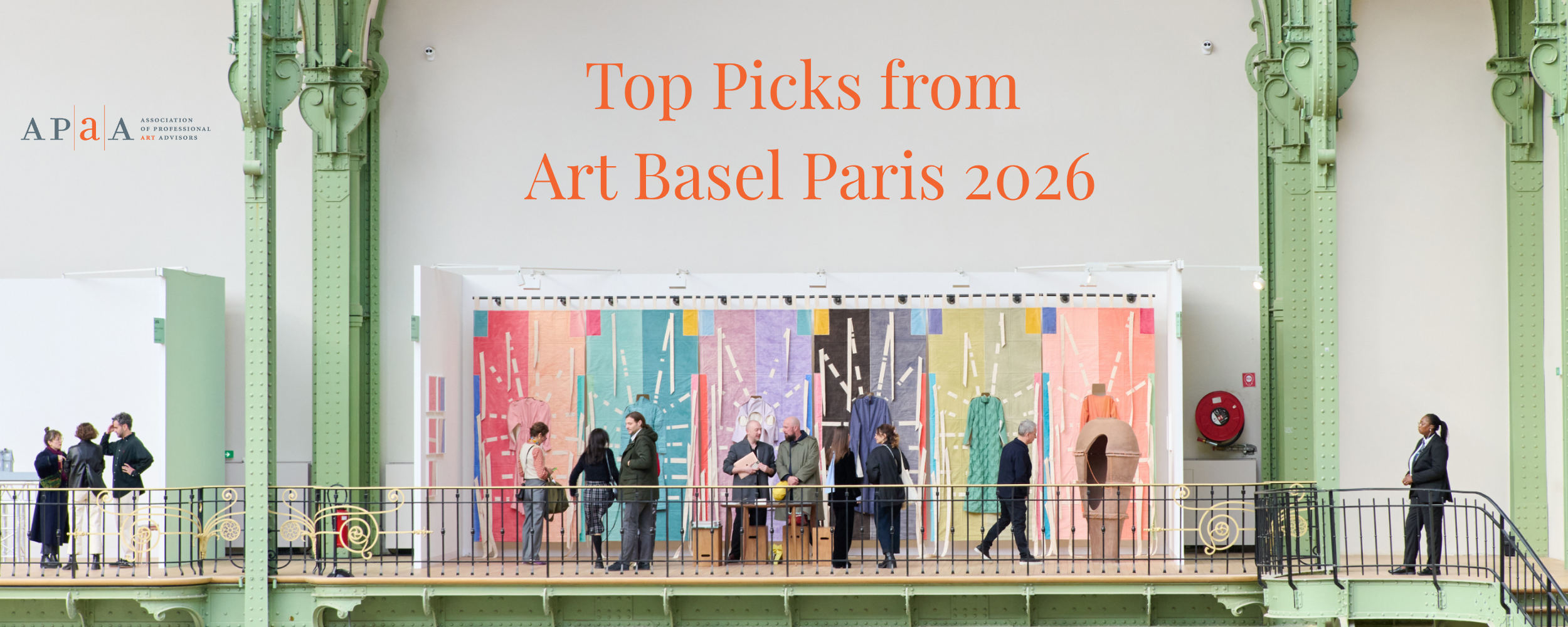
Image Courtesy of Art Basel.
Art Basel Paris returns to the recently renovated Grand Palais this week. Located between the Seine and Champs-Élysées, the fair opens to invited guests on Wednesday, October 21st, and on the morning of Thursday, October 22nd. All ticket holders can access the fair starting in the afternoon of October 22nd until Sunday, October 25th.
Visitors can explore presentations by more than 200 galleries from 41 countries and territories, including 30 first-time participants and more than 60 galleries operating in France. The main sector, Galeries, features exhibitors specializing in Modern and contemporary art across mediums. The Emergence sector spotlights emerging galleries and artists, and Premise brings twelve highly curated proposals that may include work made before 1900. Additionally, the Public Program brings special projects to nine of Paris’ storied sites.
APAA advisors share their standout selections from Art Basel Paris, providing moments of careful looking and reflection during a high-speed time. Thank you to our members for their thoughtful curations and expertise.

Paul Cézanne, Une lecture de Paul Alexis chez Zola [Paul Alexis reading at Zola's house], 1869-70
“Art Basel Paris has quickly become THE art fair to fish for a trophy art piece. For their debut appearance in Paris, the secondary market gallery, Luxembourg + Co., a gallery that punches above its weight, will show a curious early painting by Cézanne that was owned by his close friend Émile Zola. In Une lecture de Paul Alexis chez Zola (1869–70), the writer is seen at his home in Batignolles sitting across from Paul Alexis, who had joined him in Paris earlier that year. The painting remained in Zola's collection until his death in 1902 and is one of nine canvases by Cézanne that were included in an auction of the writer's estate at the Hôtel Drouot the following year. A real gem to be seen at the fair—and for more Cézanne and his influence on other artists, check out the exhibition on the other side of the Grand Palais.”
Oil on canvas
20 5/8 x 22 1/8 inches
Presented by Luxembourg and Co
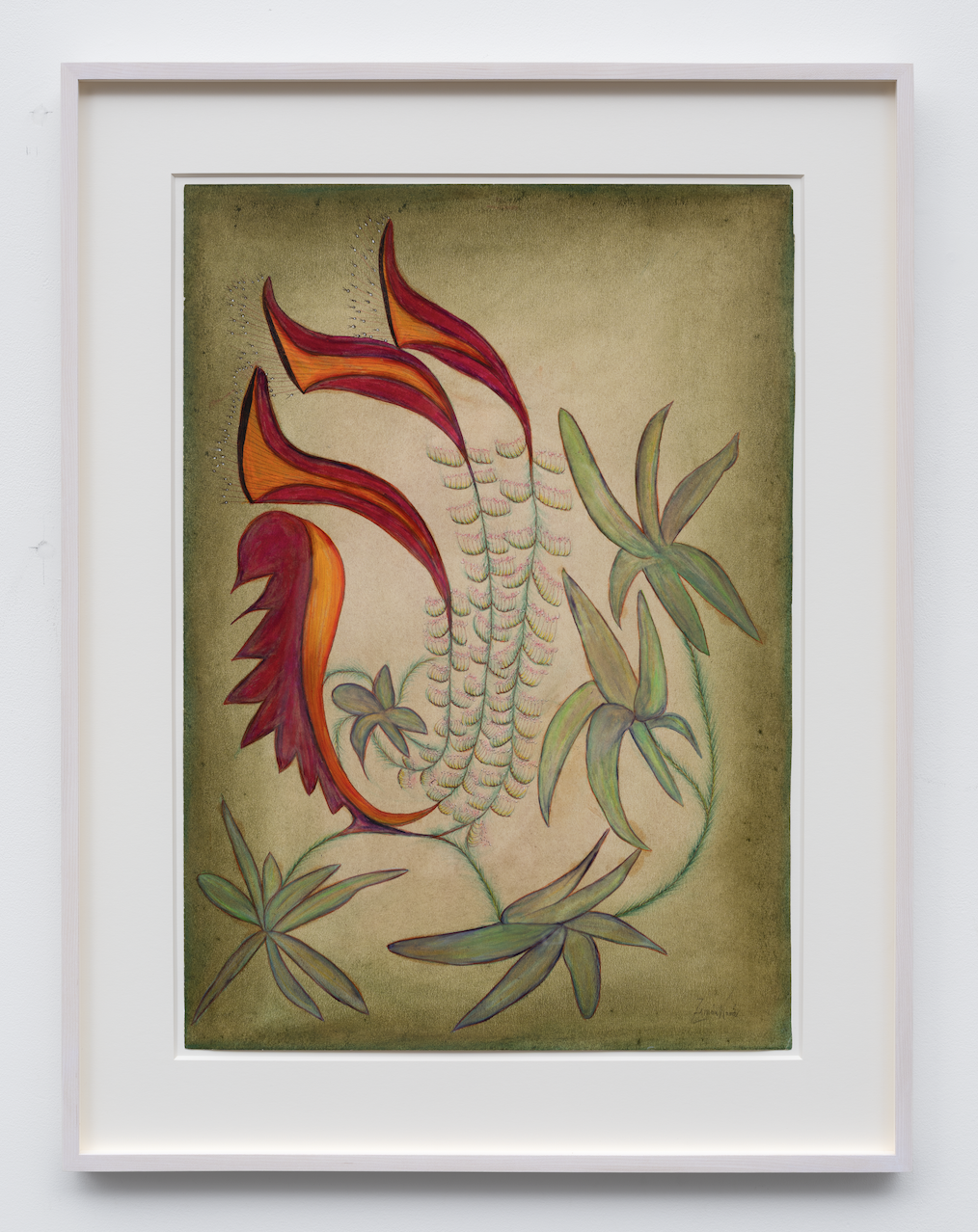
Anna Zemánková, Untitled, c. 1970s
“What I love about Anna Zemánková’s work is the way her organic forms seem to flirt with reality, hovering somewhere between the familiar and the imaginary. As a self-taught artist, she developed a world entirely her own, filled with beautiful forms and colours that have an incredible depth. The first time I saw her work, I stopped, and it reeled me in. There is something deeply poetic about her creations, a sense of movement, mystery and beauty that makes me want to keep looking.”
Pastel on paper
62.5 x 43.8 cm
Presented by Gladstone Gallery
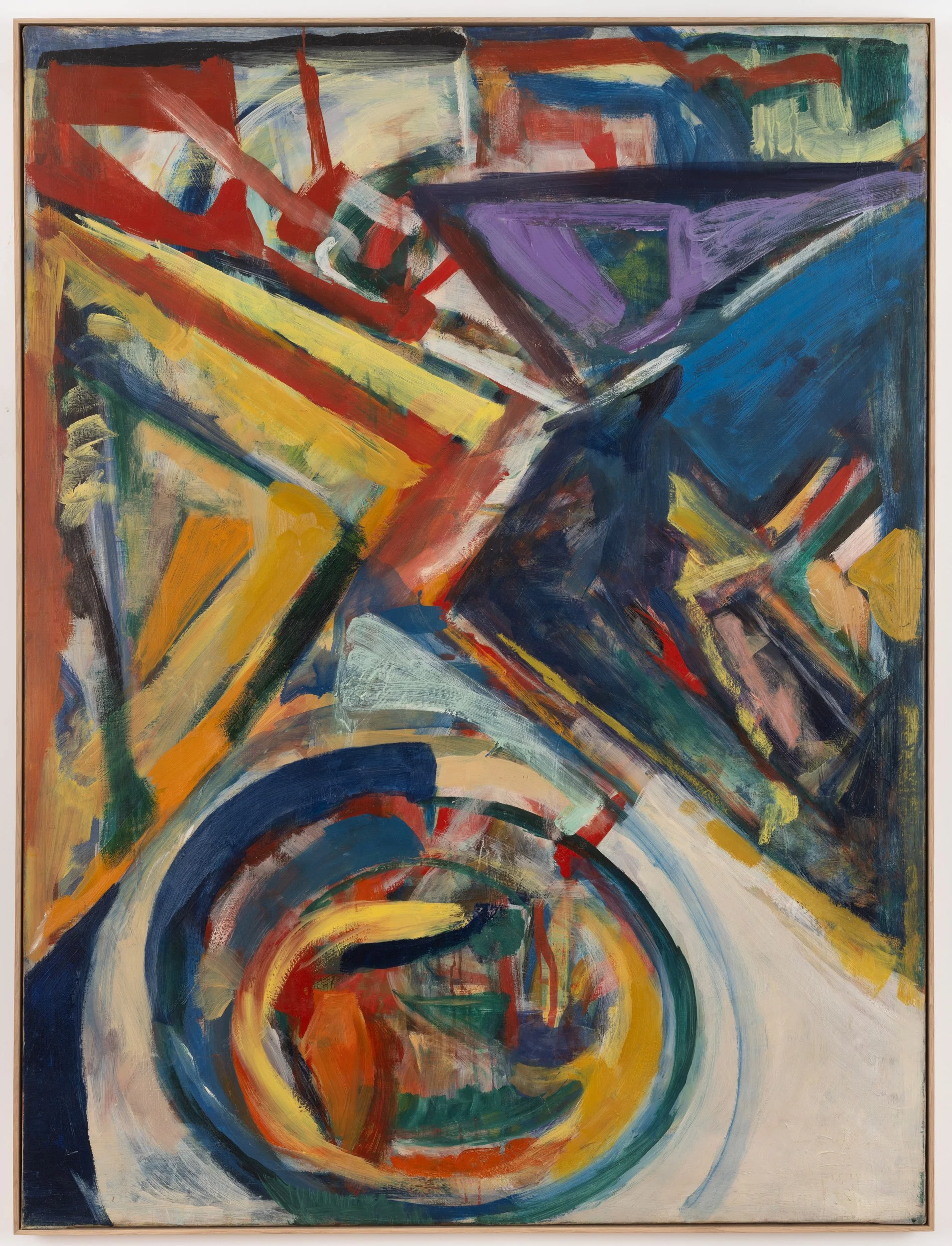
Shirley Jaffe, Untitled, c. 1965
“I'm particularly interested in the unsung heroines of art history. Like many female artists of her generation, Shirley Jaffe wasn't considered or celebrated in the same way as her male counterparts. In 1949, then in her mid-20s, Jaffe moved to Paris, sublet Louise Bourgeois' studio (located down the street from Joan Mitchell's), and quickly became a part of the city's distinct expatriate art scene. What began as pure gestural abstraction for Jaffe evolved into a style increasingly defined by flattened space and specificity of form. Untitled (c. 1965) exemplifies this seminal moment and presages her later hard-edged, free-floating formal compositions. A U.S. museum should follow in the Centre Pompidou's footsteps and mount an exhibition similar to their 2022 Shirley Jaffe: An American in Paris.”
Oil on canvas
51 1/8 x 38 1/8 inches
Presented by Galerie Nathalie Obadia
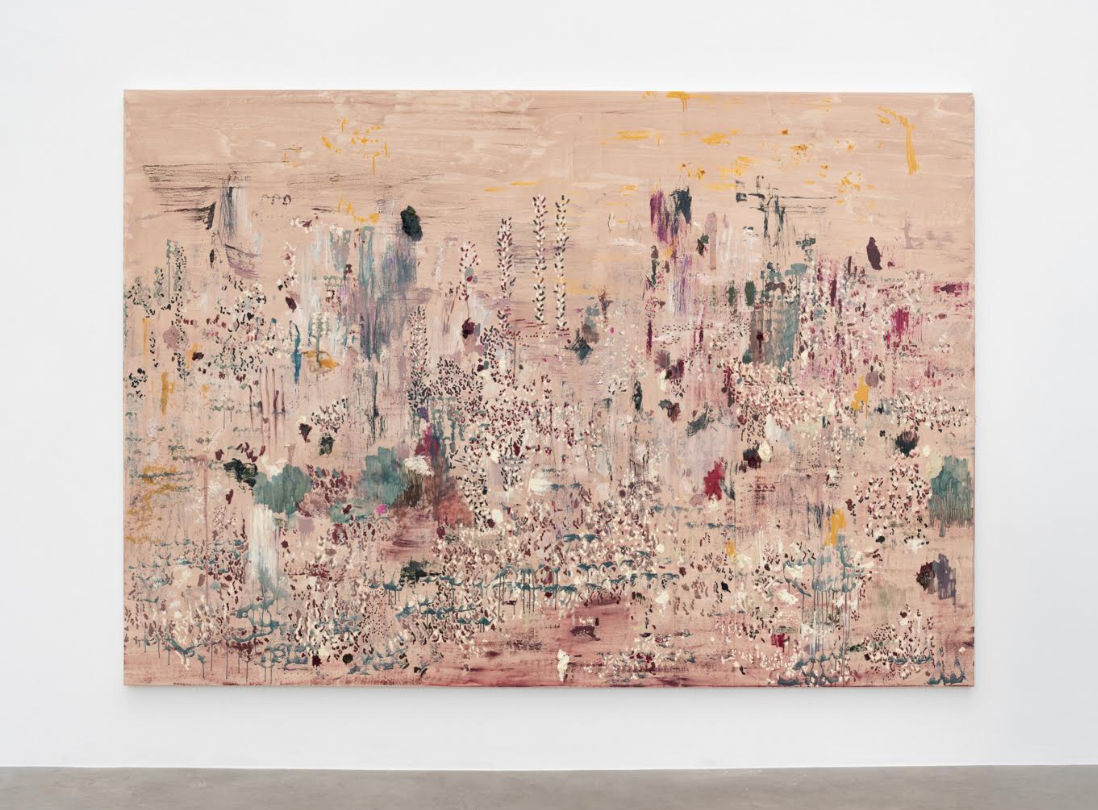
Marina Rheingantz, Quati, 2026
“Marina Rheingantz is a Brazilian artist whose paintings feel all-encompassing, as if she's providing entrée into a world only she could have created. Formed through successive applications and removals of paint, their surfaces take on a topographical disposition of their own: paint gathers, thins, stains and recedes, forms emerge and become obscured again. Our minds organize the works into "landscapes," but the term doesn't suffice -- they are fluid, stunning, challenging, and suggestive of evolution, growth, erosion, and life in its many cycles.”
Oil on canvas
82.6 x 118.1 inches
Presented by Fortes D’Aloia & Gabriel
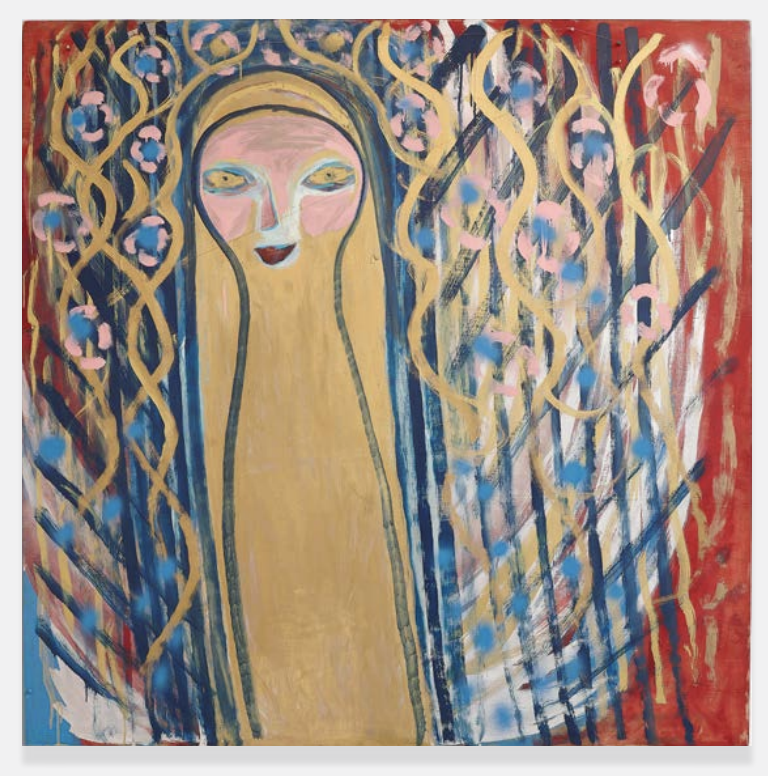
Marisa Merz, Senza titolo, Undated
“As the sole woman among the key figures of Arte Povera, Marisa Merz forged a singular artistic language over six decades. Her enigmatic portraits hover between figuration and abstraction, evoking the transcendental qualities of Byzantine icons. Paintings by Merz are rarely encountered, making this particularly compelling and expressive image an exceptional example of her work. This month, her work will be celebrated in a three-part exhibition across Castello di Rivoli, Fondazione Merz, and GAM in Turin.”
Mixed media, copper wire on wooden board
61 x 61 inches
Presented by Gladstone Gallery
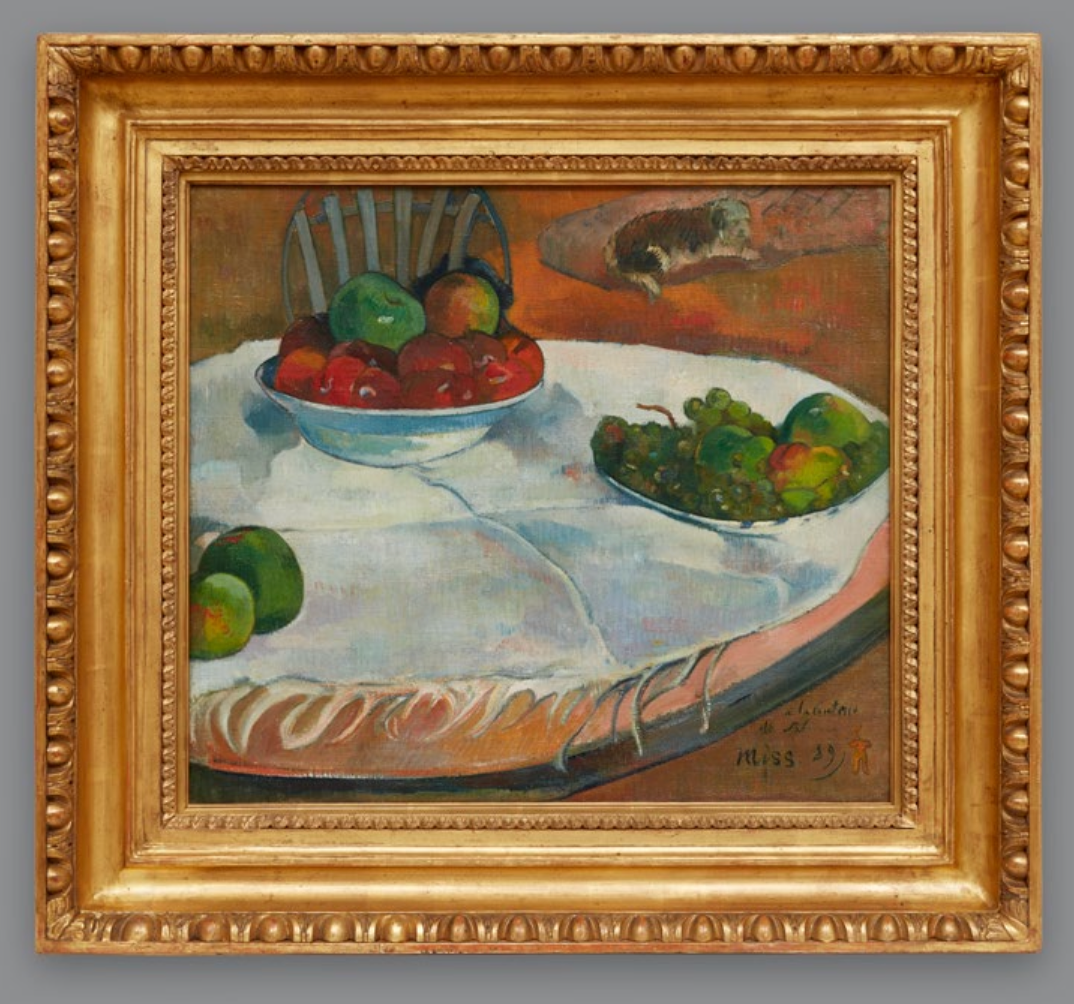
Paul Gauguin, Fruits on a Table or Still Life with a Small Dog, 1889
“Painted in the seaside town of Le Pouldu in Brittany, Gauguin sought to make work that was spiritual and pure in intention. Punctuated in intense and poignant hues of orange, red, and green, the composition is vibrant and fresh. The fresh fruit that rests on the table draws the viewer into the composition. The dog is repose in the back ground echoes of the quietude of the interior space.”
Oil on canvas
18 1/2 x 20 7/8 inches
Presented by Acquavella Galleries
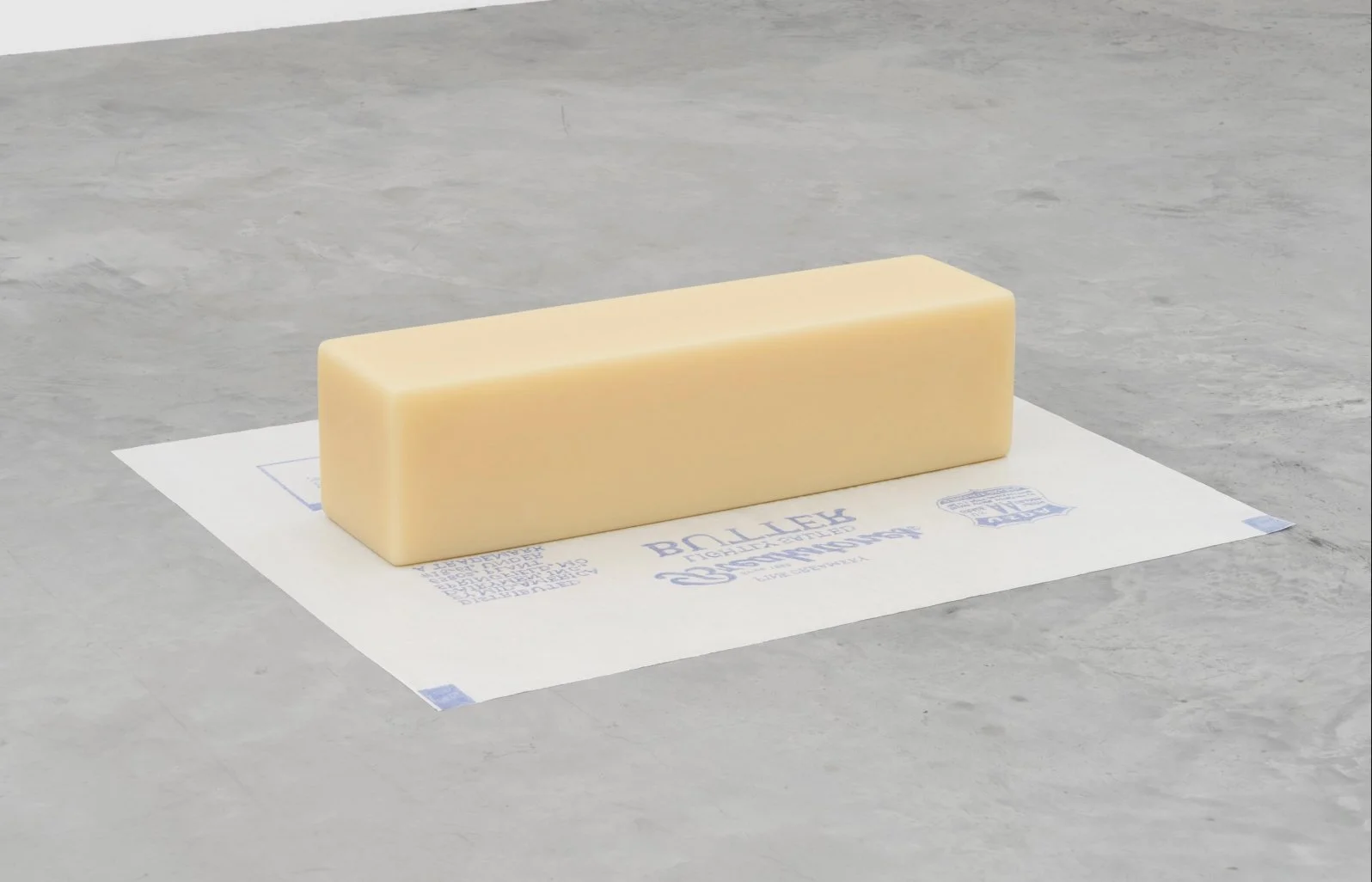
Robert Gober, Untitled, 1993-1994
“Robert Gober’s larger-than-life size stick of butter is a masterpiece in every regard; it is meticulously hand-crafted and conceptually brilliant. It joins together some of the most important ideas in 20th-century sculpture: Duchamp’s Readymade and Pop Art’s elevation of mass-produced consumer objects. By enlarging the stick of butter to be three feet long and making it by hand out of beeswax, this familiar and ubiquitous object becomes something new and mysterious (slippery, even!) and vulnerable in its softness. I could look at this work forever.”
Beeswax, wood, glassine, felt-tip marker pen ink
9.25 x 48 x 40.25 inches
Presented by Matthew Marks Gallery
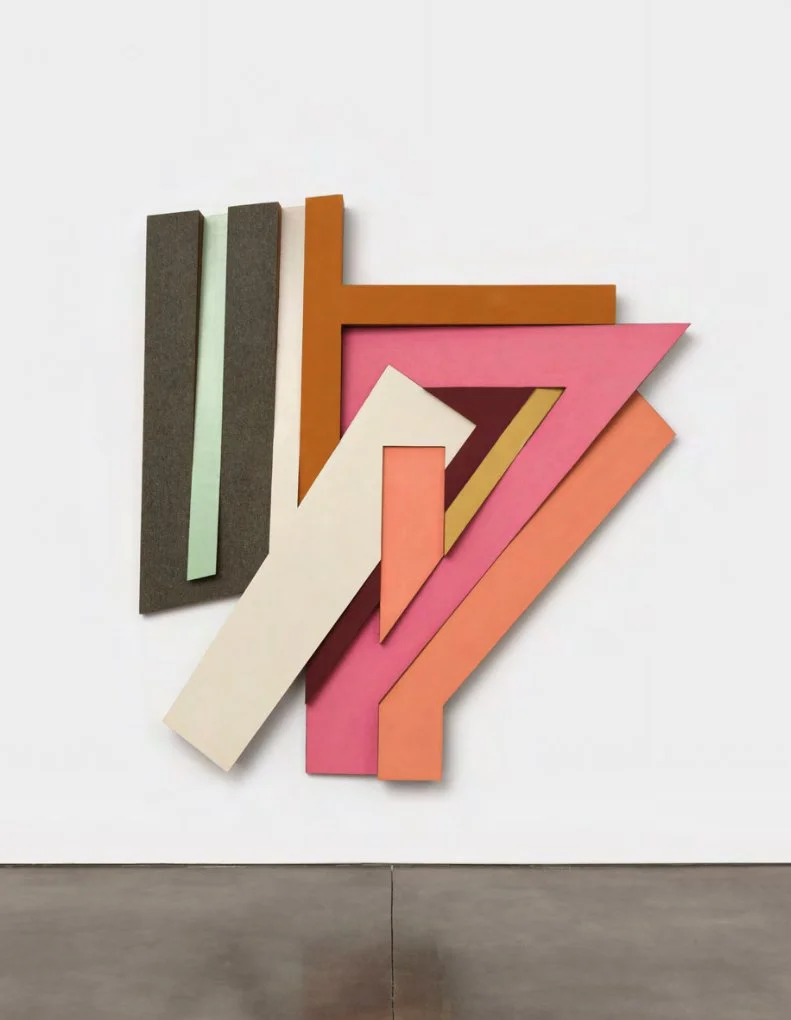
Frank Stella, Zabludow III, 1973
“Frank Stella’s influential practice evolved through distinct phases, united by his enduring interest in geometric form. Zabludow III (1973) bridges his restrained minimalist paintings of the 1950s and ’60s and the exuberant, three-dimensional constructions that followed. I particularly like how this work combines interlocking geometric forms with sculptural depth, reflecting his shift toward dimensionality while retaining an elegant sense of balance and refinement. Part of his Polish Village series (1970–73), the composition draws inspiration from the elaborate carpentry and architecture of wooden synagogues destroyed in Poland and Russia during World War II.”
Mixed media collage (felt, colored canvas, paint on tri-wall cardboard)
92 x 88 x 7 1/2 inches
Presented by Paula Cooper Gallery
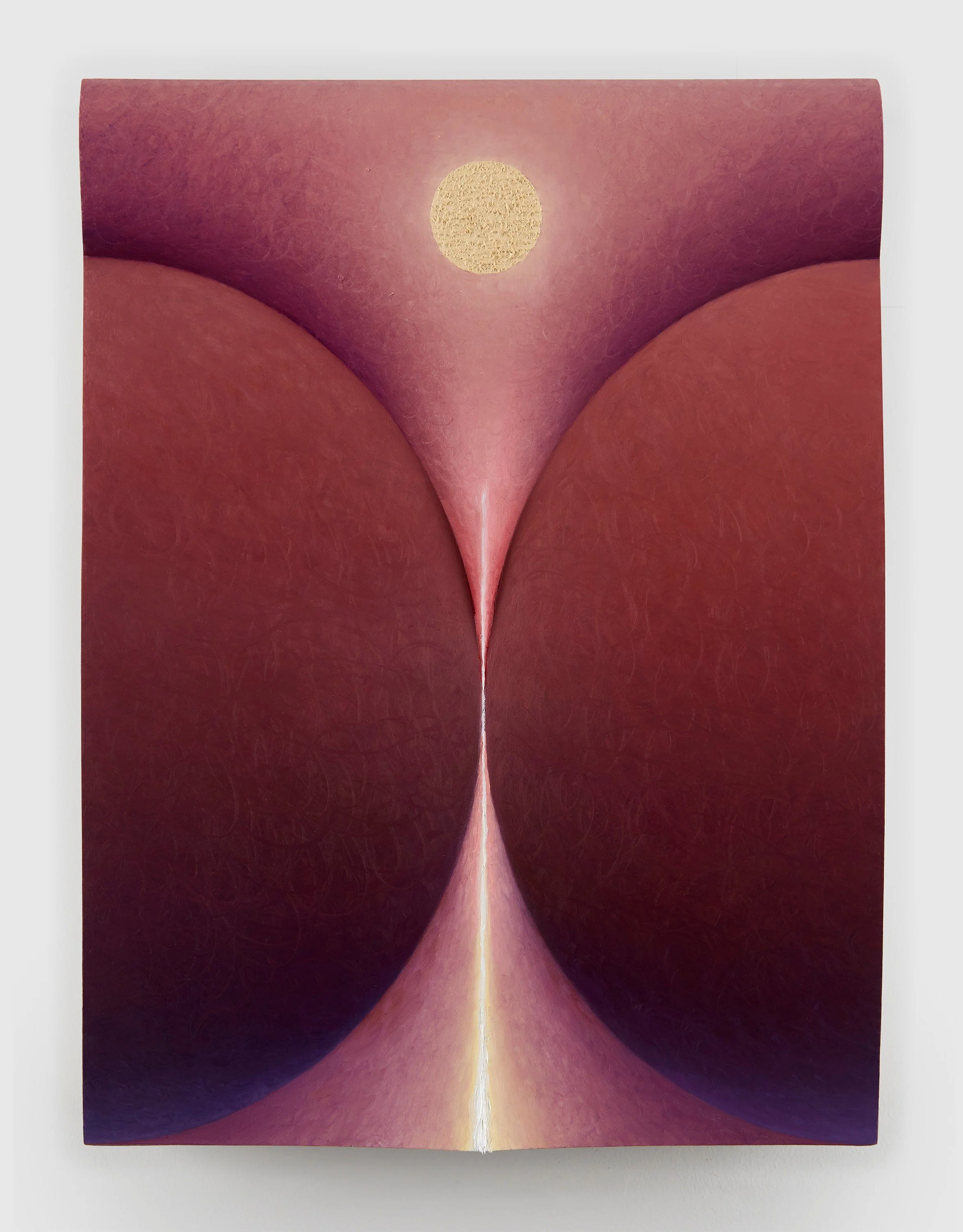
Loie Hollowell, Pressure in flesh tones, 2026
“Hollowell’s internal self-portraits of the female body’s mechanics are both relatable and evocative. Her virtuosic anatomical abstractions conjure the sensation of being squeezed and pressed, as the eye shifts between sensual forms that seem to advance and recede. Two swollen convex shapes, layered in pink, red, and violet flesh tones, press against each other, meeting at a single pressure point defined by a luminous white line. A textured golden orb hovers above them, making light itself a subject.”
Oil on aqua resin cast in linen-covered frame
12 x 9 x 2 inches
Presented by Jessica Silverman

Edmund De Waal, untitled (let no air now be sung), 2024–2026
“We live in a moment calling for order and balance in our visual lives. de Waal's sculptural work offers an affirming poetic rhythm with its objects of quiet beautiful colours and chalky textures - something you want to inhabit.”
Porcelain, silver, aluminium, wood and glass
48 x 37 3/8 x 7 1/2 inches
Presented by Galerie Max Hetzler
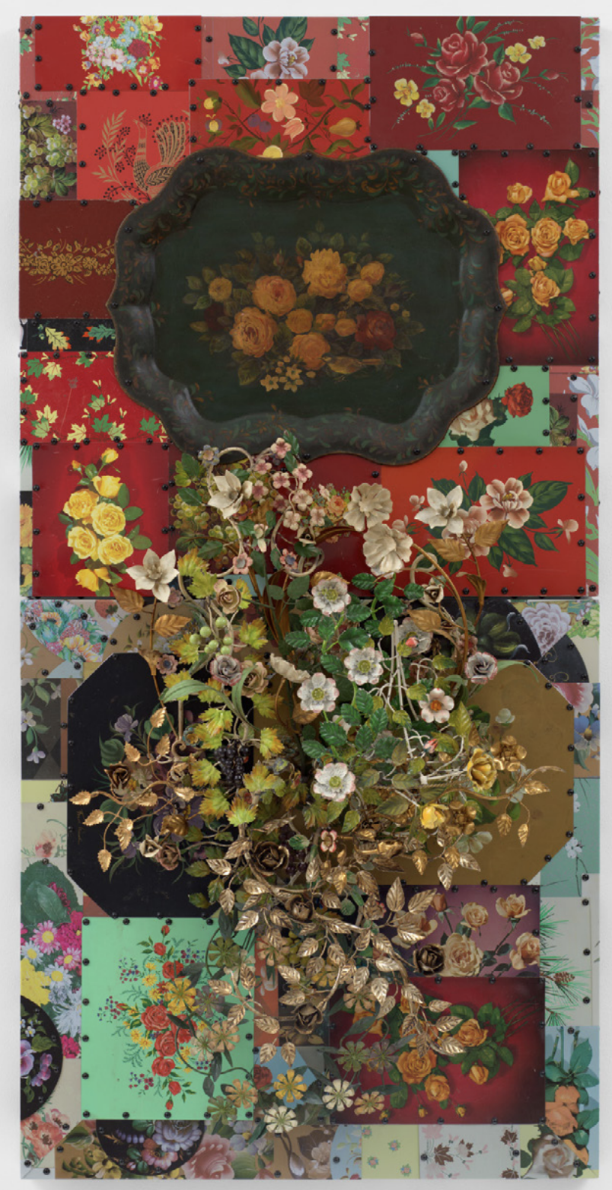
Nick Cave, Grapht, 2024
“I am always struck by how Cave’s two-dimensional mixed media wall works (outside of his iconic Soundsuits) create such a rich, multi-layered, visceral, and immersive experience. Combining textiles, quilts, beads, sequins, domestic objects, photographs, and other collected materials, Cave builds his richly layered surfaces that hover between painting, collage, assemblage, and sculpture. Beyond the visual aspect, his works also draw on personal memory and childhood, and explore Black identity, consumer culture, and socially charged commentary.”
Vintage metal serving trays and vintage tole on wood panel
72 x 36 x 10 inches (overall)
Presented by Jack Shainman
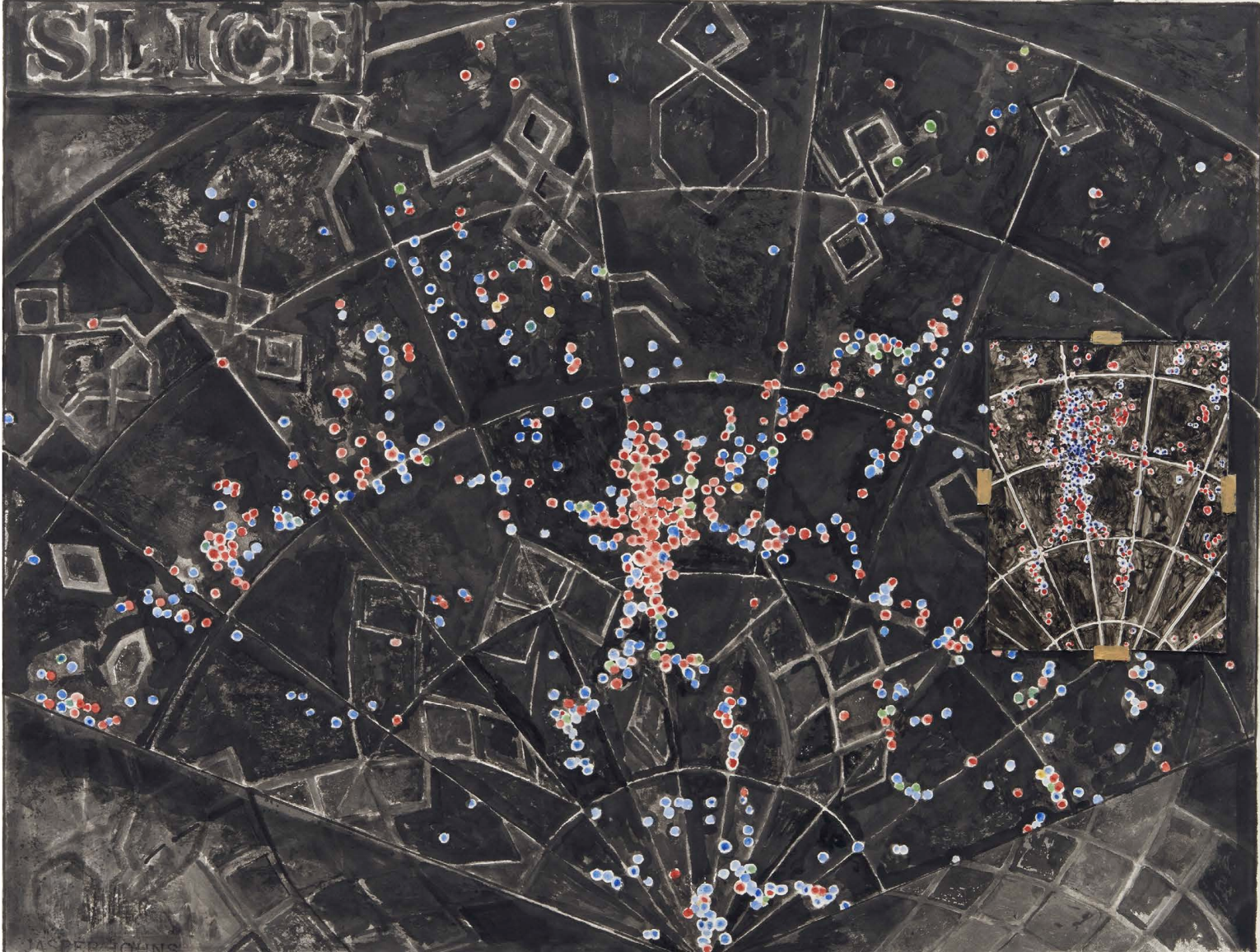
Jasper Johns, Untitled, 2021 + 2024
“Art fairs bring out gems like this large-scale work on paper by Jasper Johns. Executed in watercolor with ink, graphite, and collage over etching, this work appears at the fair with Matthew Marks Gallery. A living legend who first made his mark in the 1950s, the title, Slice, is taken from a 1986 map by the astrophysicist Margaret Geller, “Slice of the Universe,” which charts the distribution of neighboring galaxies. Johns overlays the map onto a pattern derived from a geometric knot by Leonardo da Vinci, a poetic reference to the interconnectedness of natural systems, including humanity and our place in the universe. A second version of the map appears attached to the larger sheet with trompe-l’oeil tape, reflecting Johns's interest in the concept of doubling and the illusory nature of perception. This large-scale, exquisite drawing relates closely to Johns’s painting Slice, 2020, a promised gift to The Museum of Modern Art, New York.”
Watercolor, India ink, graphite, and collage over etching on paper
18¼ × 22½ inches
Presented by Matthew Marks Gallery
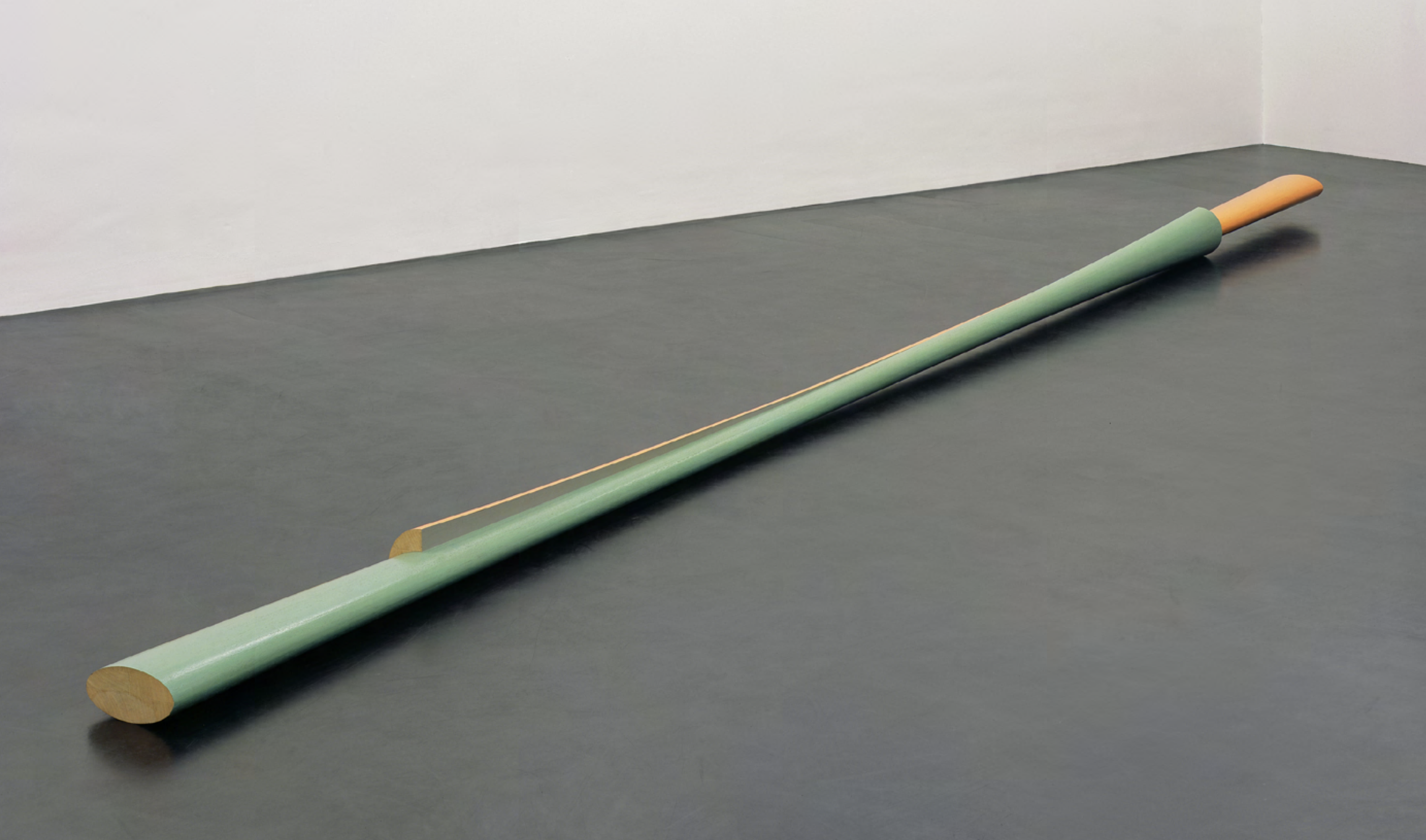
Isa Genzken, Grün-orange-graues Hyperbolo ‘El Salvador’, 1980
“This sculpture is from an early series of ellipsoids and hyperbolos that Isa Genzken began developing in the mid-to-late 1970s, following a period in which Minimalist sculpture and industrial materials had dominated the art world. Although its sleek form appears machine-made, the sculpture was produced through a collaboration between Genzken, physicist Ralph Krotz, and a master carpenter. Genzken began by creating sketches, which Krotz then translated into precisely calculated, computer-generated plans. The drawings were subsequently given to the carpenter, who fabricated the sculpture in wood. The hyperbolo, and the related ellipsoids, bring together artistic vision, scientific calculation, and traditional craftsmanship, in an early example of computer technology used in the production of an artwork.”
Abachi wood, lacquer paint
5 7/8 x 7 ½ x 236 3/8 inches
Presented by Galerie Buchholz
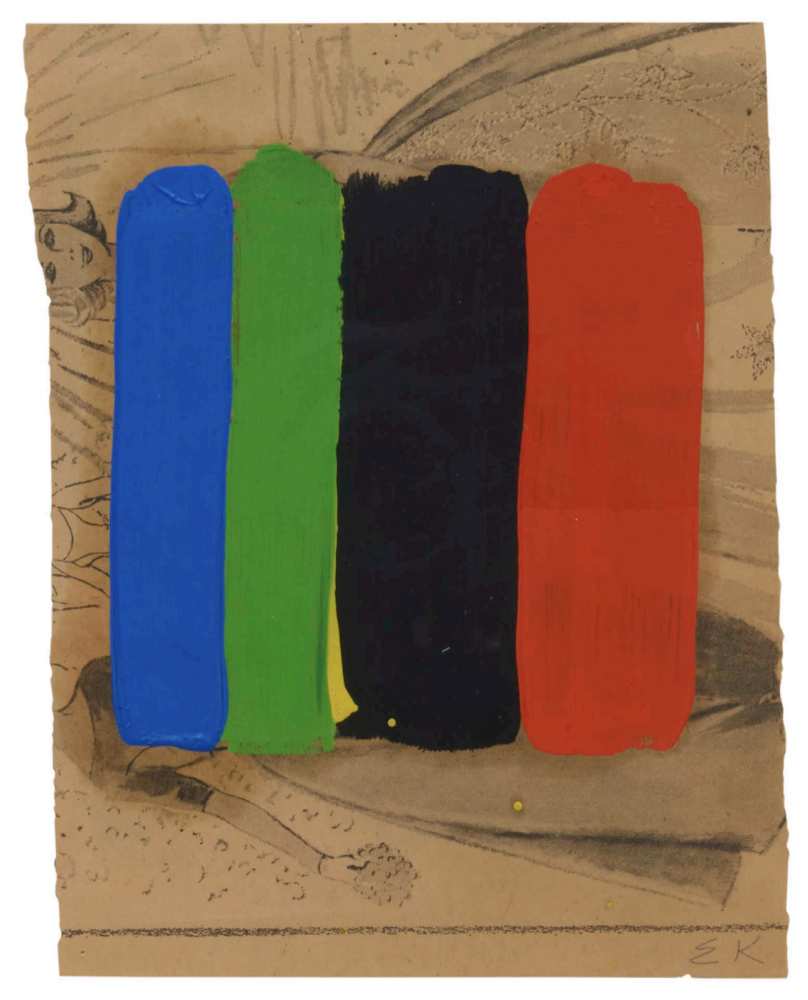
Ellsworth Kelly, Study for Four Color Panels, 1962
“I think there is something fitting about choosing an Ellsworth Kelly to bring home from Paris, where he returned in 1948 with support from the G.I. Bill and began developing his distinct abstract language. I am drawn to the intimacy of this object. It has everything I love about a great study: the bold strokes of an artist thinking through an idea.
Here we see the ongoing relationship that Kelly has to color and form. Blue, green, a small slip of yellow, black and red sit side by side on top of printed imagery. It is a wonderful encounter with Kelly’s thinking, and his signature color choices and his masterful precision.”
Oil on newsprint
8 7/8 x 7 1/8 inches
Presented by Matthew Marks Gallery
