
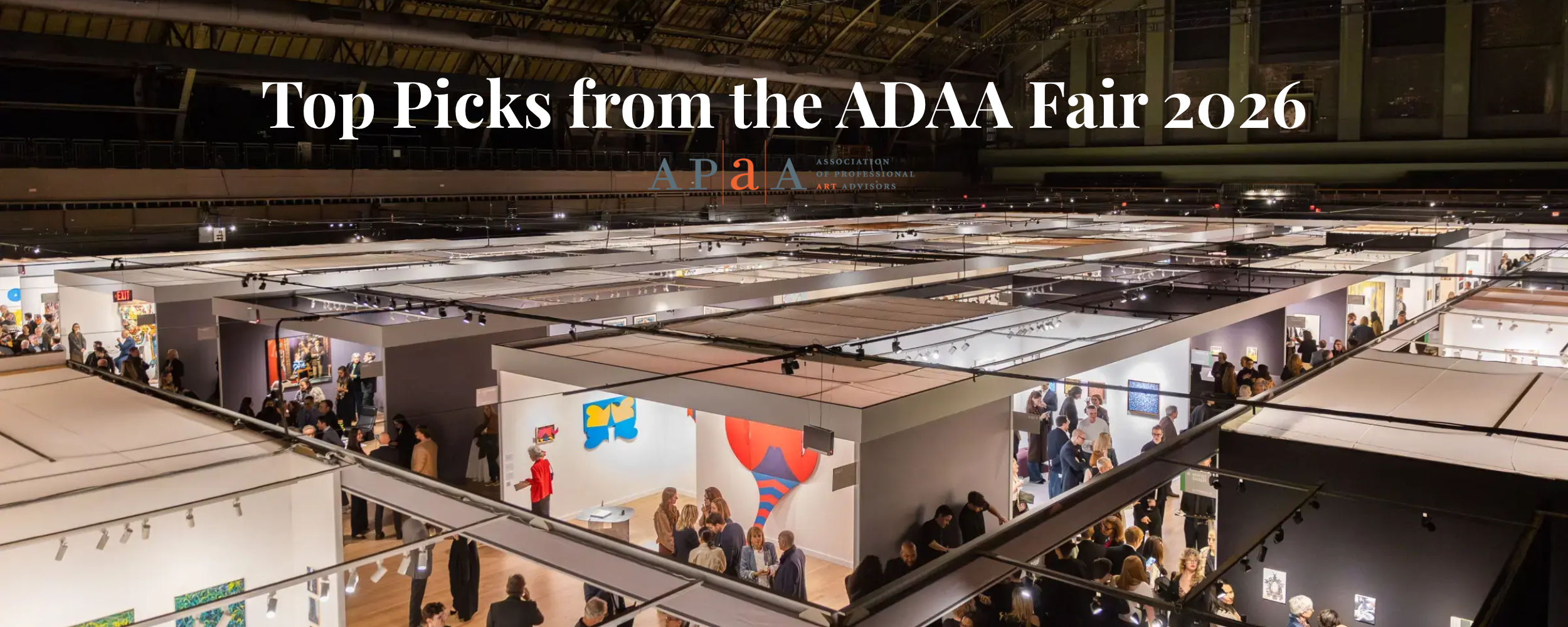
Image Courtesy of the Art Dealers Association of America.
The Art Dealers Association of America (ADAA) Fair returns to the Park Avenue Armory following a hiatus in 2025. Emphasizing the ADAA’s tenets as a nonprofit, peer-reviewed organization, this year’s fair reflects an expanded vision for galleries and museums, featuring solo and group presentations from 63 member galleries. The fair will also feature a focused program of VIP and public events.
The fair opens with its Preview Gala on Thursday, November 12th, with all proceeds benefiting the Whitney Museum of American Art’s educational and artist programs. The VIP Preview takes place Friday morning, and the fair will open to the public that afternoon until closing on Monday, November 16th.
APAA advisors share their standout selections, noting themes of memory, expanding upon art history, and the use of color. Thank you to our members for their thoughtful curations and expertise.
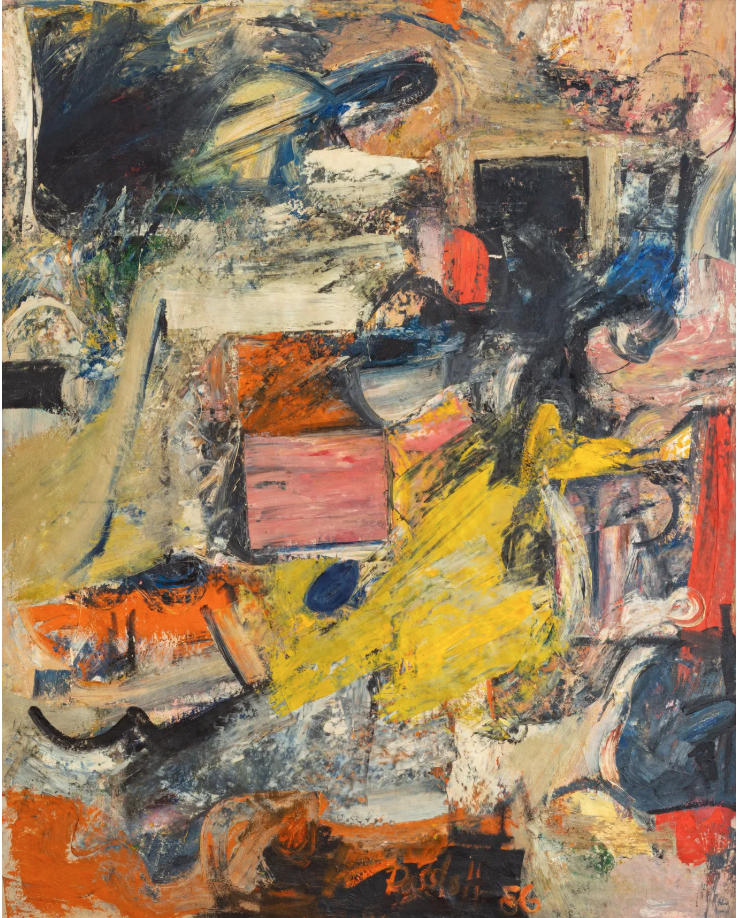
Pat Pasloff, Wednesday, 1956
“Pat Pasloff trained at Black Mountain College under Willem de Kooning and attended Cranbrook Academy of Art prior to moving to New York City, where she was deeply embedded in the downtown New York avant-garde of the mid-1950s. A participant in The Club and the Tenth Street cooperative gallery scene, Pasloff painted Wednesday in 1956 as her voice and style were rapidly evolving. The work resists a fixed narrative, instead evoking memory, presence, and atmosphere through layered, collage-like mark-making and a nuanced approach to color. As Pasloff’s critical contributions to the development of Abstract Expressionism become clearer, a work such as Wednesday stands as a beautiful early example of a brilliant artist’s underappreciated career.”
Oil on canvas
71 1/2 × 57 1/2 inches
Presented by Schoelkopf Gallery
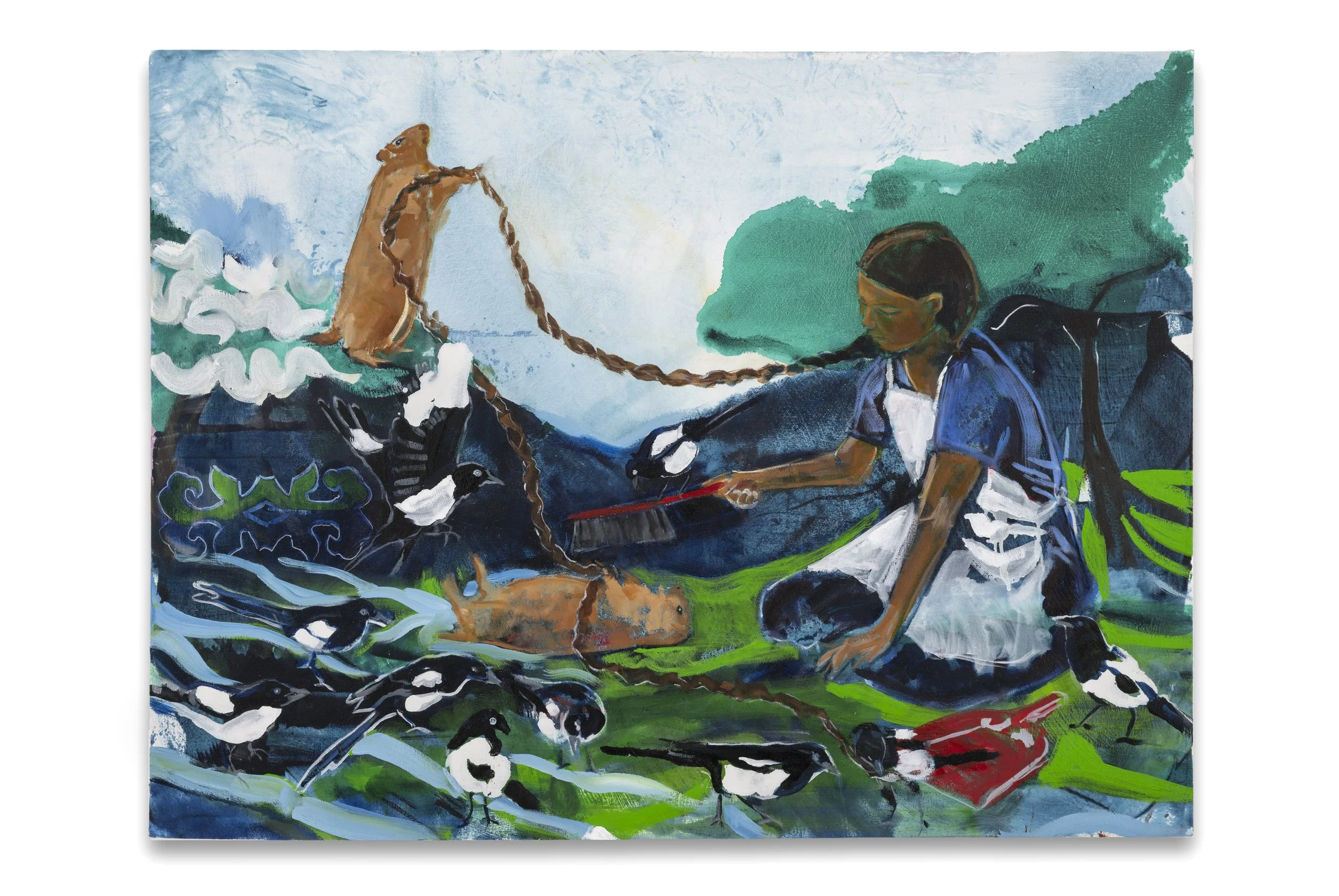
Julie Buffalohead, Magpie, 2026
“I admire the artist’s ability to weave together her personal biography, ancestral history, cultural identity, and experiences of belonging for all of us as humanity in her practice. This specific work, Magpie, is dedicated to her ‘relative and one of the young Ponca women sent to the Carlisle Indian Industrial School in Pennsylvania in the early 1900s. Known for her rebelliousness, Hinman repeatedly fled the school. Buffalohead celebrates her ancestor’s defiance, depicting her kneeling in the grass with a hand broom surrounded by prairie dogs and magpies. Her long braid winds across the composition, linking the figures in a gesture of reconnection.’ (Gallery)”
Oil on canvas
32 x 42 1/4 x 2 ½ inches
Presented by Jessica Silverman Gallery
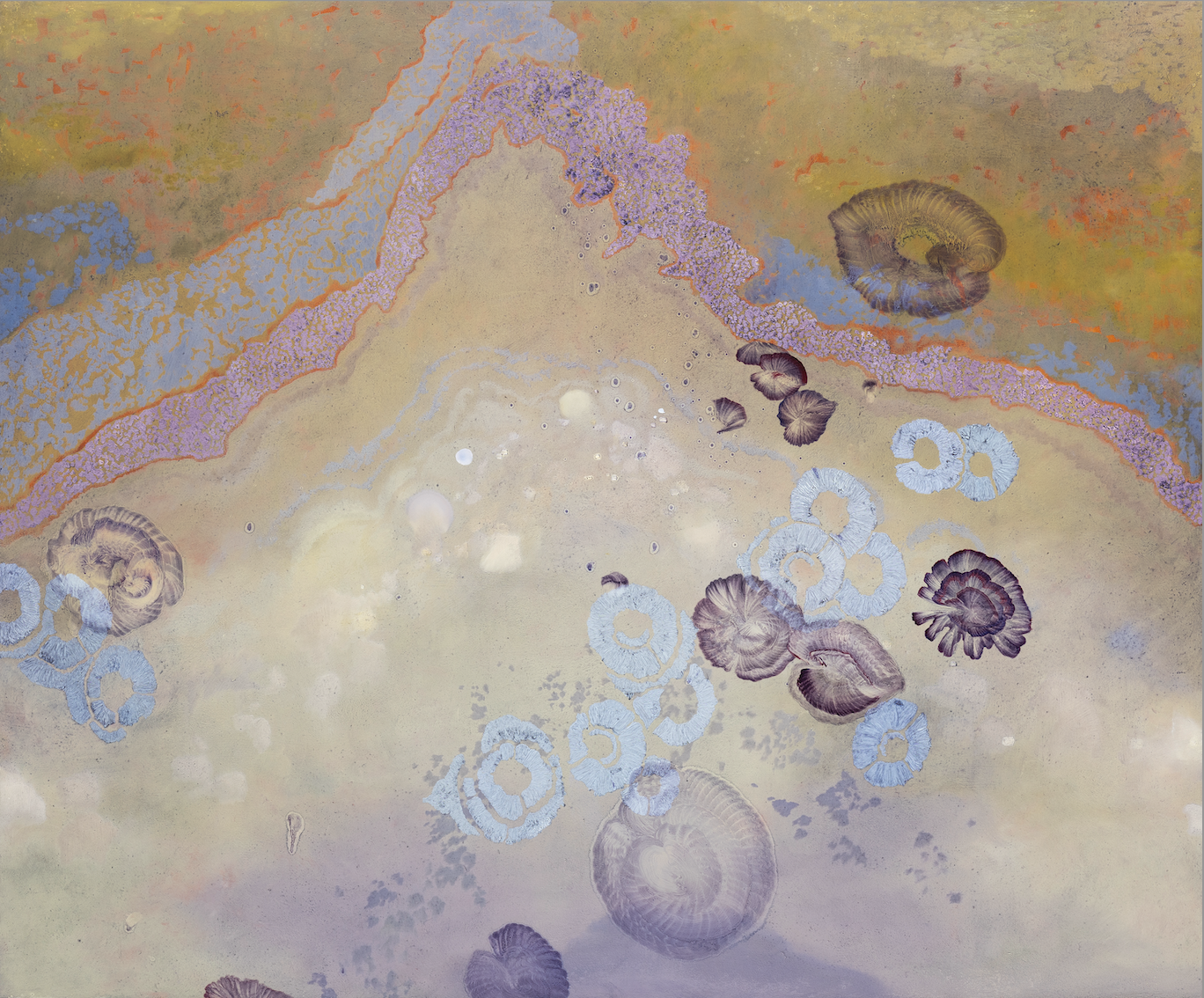
Darren Waterston, Flurry, 2026
“In Flurry, Darren Waterston evokes the spirit of Romanticism, drawing inspiration from the music of 19th-century Norwegian composer Edvard Grieg and translating it into a contemporary visual language. As much as Waterston paints what he hears, I find myself recalling the sweeping vistas of Caspar David Friedrich and the fiery luminosity of J.M.W. Turner’s seascapes. Waterston’s delicate, feathered brushwork, reminiscent of Victorian-era pressed flowers—another nod to the 19th century—evokes a sense of touch. Flurry rewards close looking, inviting the viewer to share in the artist’s synesthetic experience. Perhaps, if you look closely enough, you can hear the music, too.”
Oil on wood panel
30 × 36 inches
Presented by DC Moore Gallery
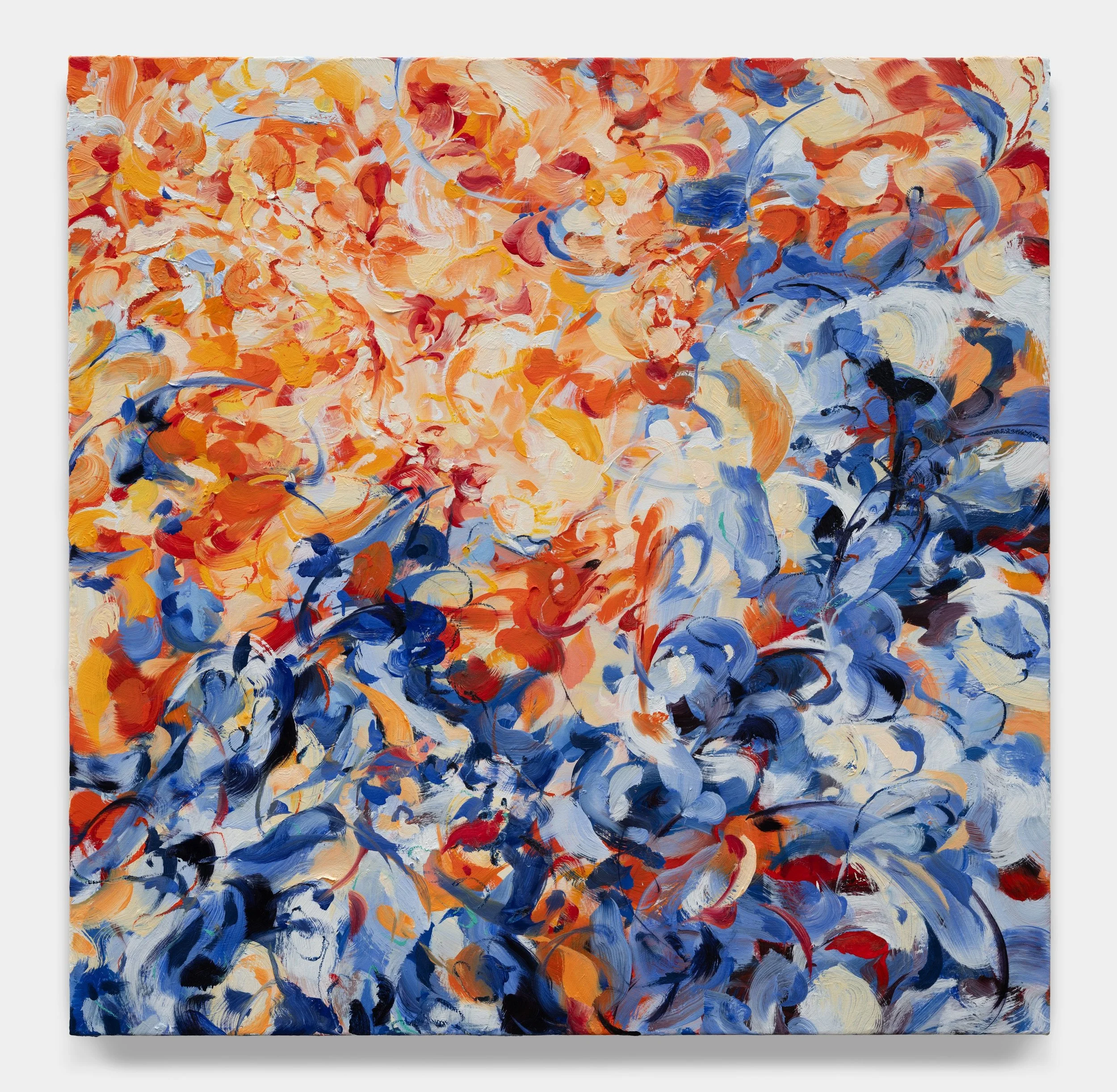
Julia Jo, In Her Orbit, 2026
“Julia Jo’s jewel-toned paintings hover between figuration and abstraction, where images emerge, dissolve, and reconstitute themselves through a dynamic interplay of color, gesture, and form. With richly saturated hues and expressive, searching brushwork, Jo transforms the elusive complexities of human emotion into paintings that are deeply personal, visceral, and open to interpretation.”
Oil paint, oil stick, and oil pastel on linen
40 × 40 inches
Presented by Charles Moffett
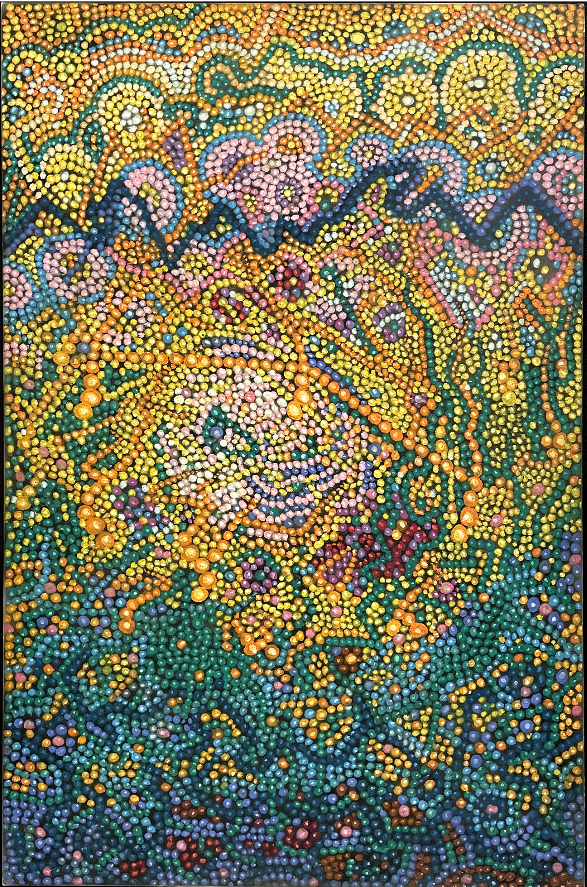
Lee Mullican, Illumination Venice, 1967
“Lee Mullican’s work helped define West Coast abstraction in the mid-20th century. Through intricate, rhythmic patterns and richly layered color, he created mystical, spiritual compositions that evoke otherworldly realms. Illumination Venice (1967) stands out as a particularly striking and distinctive work within the artist’s practice. Executed in rich oil pastels, the composition features a mesmerizing arrangement of bead-like circles that capture light. Though abstract, the work evokes a range of associations, from topographical landscapes and celestial imagery to the intricate detailing of an ornate textile.”
Oil pastel and acrylic on paper board
30 x 20 inches
Presented by Marc Selwyn Fine Art

Cecily Brown, Untitled, 2026
Monotype in watercolor and crayon on Lanaquarelle
47 7/8 x 96 7/8 inches
Presented by Two Palms, NY
