
APAA Client Spotlight: In Conversation with Skarlet Smatana on the George Economou Collection
APAA Executive Member Skarlet Smatana is the director of the George Economou Collection. Since taking this position in 2012, she has honed the collection's objectives and spearheaded its exhibition program, including the collection’s most recent exhibition, The Way We Live Now. Co-curated by Hilton Als and Ann Philbin, both working for the first time directly from a private collection not their own, The Way We Live Now is the George Economou Collection’s first group exhibition, and examines humanity’s condition through works solely from its holdings. The exhibition is split into three loose sections — Intimacy, Policy, and Being — moving from the intimate, to the individual, and to our shared existence.
Below, Smatana discusses how the exhibition took shape through conversations that began during the pandemic, what it was like collaborating with Als and Philbin on a collection that wasn't their own, and why she believes the show's themes, however contemporary, are ultimately timeless.
You’ve organized solo shows for Charles Ray, Jenny Saville, David Hammons, Georg Baselitz, Jeff Wall, Katharina Fritsch, to name a few, since 2012. What made this the right moment for the collection’s first contemporary group exhibition?
We arrived at the concept of this exhibition through a series of conversations with George Economou and his daughter, Alexandra, beginning during the COVID-19 pandemic and continuing in the years that followed. In these discussions, we reflected deeply on our present and uncertain future as part of a living history while considering the ever-evolving nature of contemporary art.
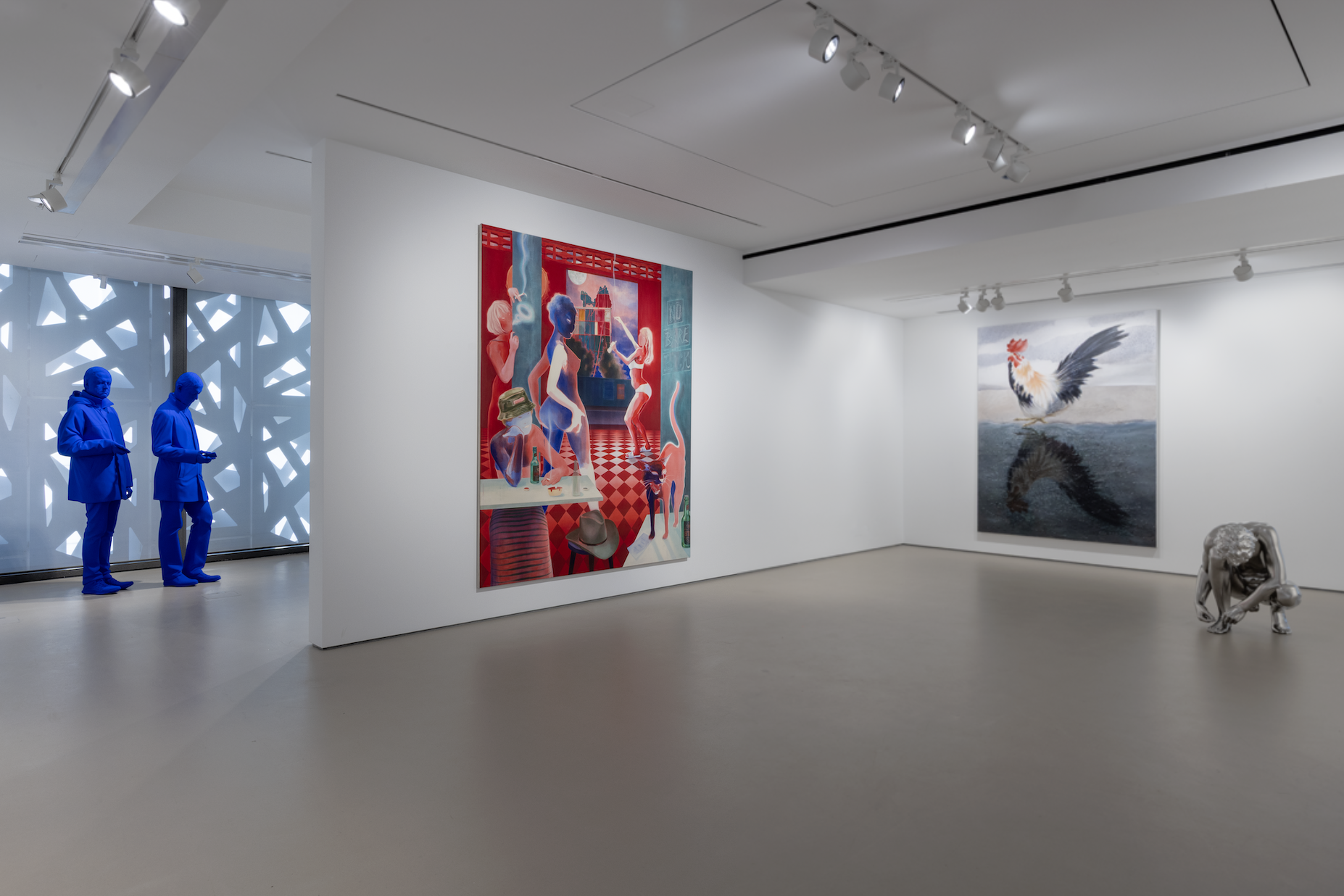
Installation view: The Way We Live Now, The George Economou Collection, © Katharina Fritsch, VG Bild-Kunst, Bonn / OSDEETE, Athens 2026, © Lisa Brice. Courtesy the artist, © Allison Katz, © Charles Ray. Courtesy Matthew Marks Gallery. Photo: Natalia Tsoukala
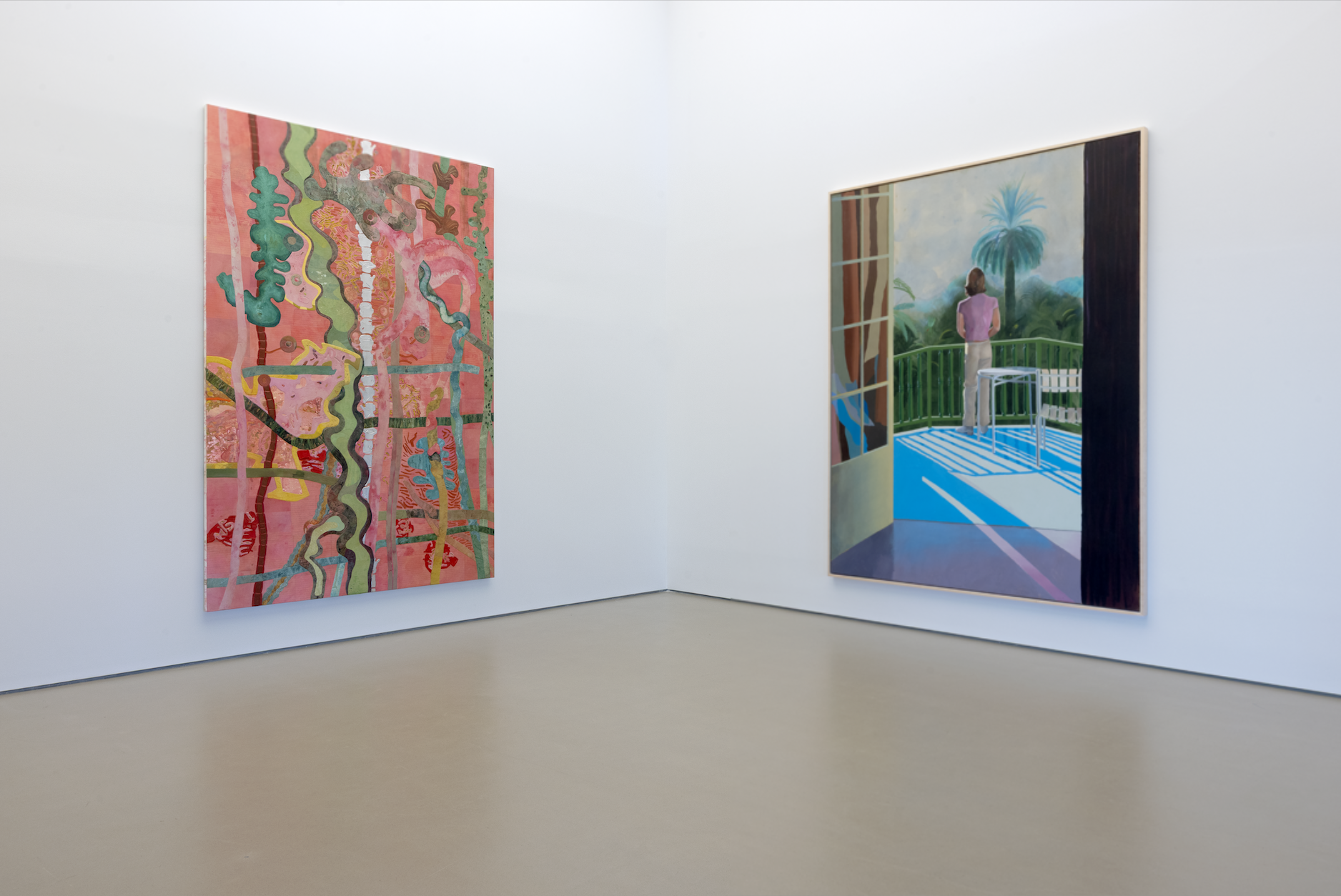
Installation view: The Way We Live Now, The George Economou Collection, © Ellen Gallagher. Courtesy of the artist and Hauser & Wirth, © David Hockney. Photo: Natalia Tsoukala
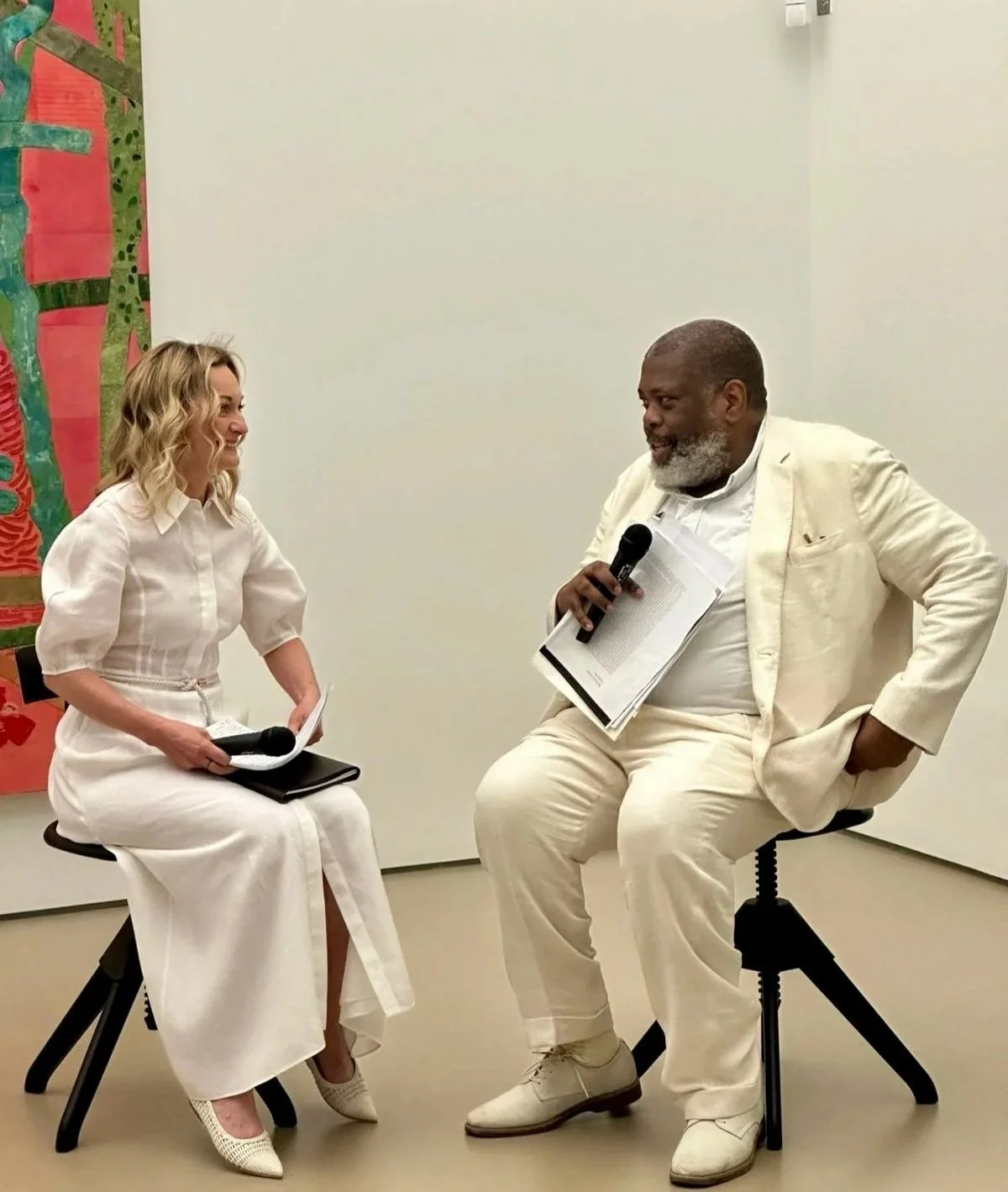
Skarlet Smatana with Hilton Als at the exhibition opening on June 21, 2026.
Hilton Als and Ann Philbin came in as outside curators working entirely from someone else’s collection. What did that collaboration look like day-to-day?
Both Als and Philbin led with an emotional and intuitive approach in reviewing, considering, and selecting from the collection together with the idea of The Way We Live Now in mind. They share a highly empathetic understanding of human nature and the necessity of human connection. Combined with their intellect, Als and Philbin have had long and distinguished careers in support of the visual arts and as witnesses to the ways in which artists navigate the world. We worked together, taking time to understand the contemporary works in the collection and gradually filtering our selections to ensure our focus remained on the present. A few works were already committed to institutional loans and would otherwise likely have been included in this project.
Many of these works have been part of the collection for years, acquired for different reasons than how they’re read now. Did any piece take on new meaning for you once placed in this exhibition’s context?
Yes, actually. All the works presented are emotive, intimate, and human at their core, and I believe each was created with a pioneering spirit that informs our time and place. Louise Bourgeois’s oversize oval stainless steel mirror and a pair of wooden chairs, which are activated once one or two people take a seat to face their reflection, become even more powerful placed at the center of the second-floor room. There is space for viewers to encounter and question themselves and their relationship to others. The works by Hockney and Saville similarly delve into human relationships, elusive emotional tensions, and the realization that life has little value without learning to understand our interactions.
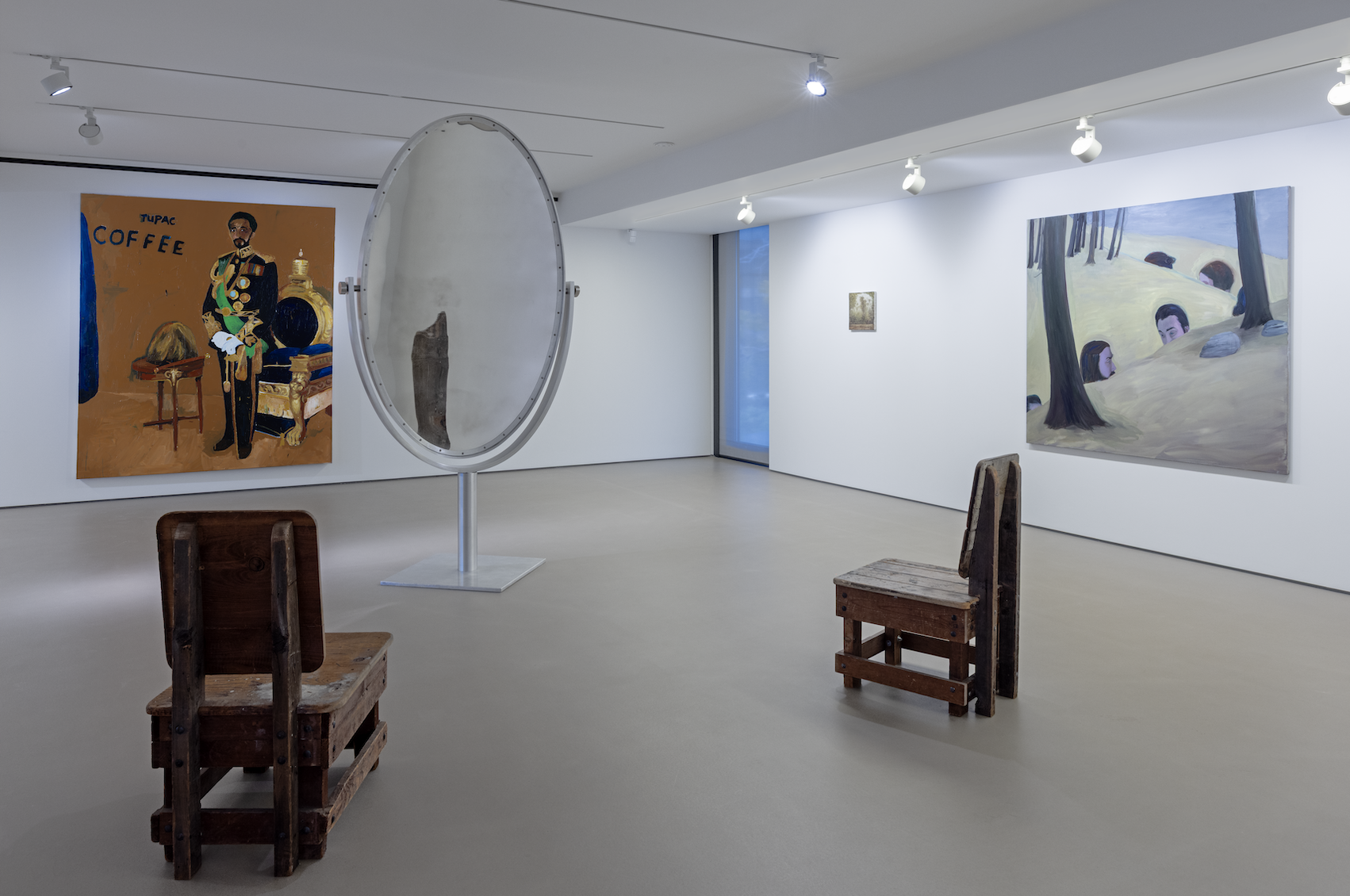
Installation view: The Way We Live Now, The George Economou Collection, © Henry Taylor. Courtesy of the artist and Hauser & Wirth, © Lucas Arruda. Courtesy of the artist and David Zwirner, © Xinyi Cheng. Courtesy Matthew Marks Gallery, © The Easton Foundation / Artists Rights Society (ARS), NY / OSDEETE, Athens 2026. Photo: Natalia Tsoukala
The collection offers free public admission in Athens. How do you see this show’s role for local audiences encountering contemporary work for the first time?
The Way We Live Now invites everyone, regardless of their prior knowledge of the visual arts. The subject is timely and reflects our current circumstances, but its themes are quite timeless. In Plato’s Symposium, he describes love as “the pursuit of the whole,” through which humans experience a natural drive toward connection, sharing our lives and vulnerabilities, self-discovery, and transcendence in pursuit of a meaningful life. Do we not universally seek this balanced state of joy and contentment, whether in the fourth century BC or in the twenty-first century?
A monograph with essays by Als, Lisa Brice, Heather Ive, Ben Okri, and Charles Ray accompanies the show. What role did you play in shaping that publication alongside the exhibition itself?
I invited Als and Philbin based on their unique understanding of how artists draw upon the world. I also approached Lisa Brice for her involvement, as her artistic practice has established her as a significant cultural contributor of her generation. Likewise, Heather Ive, Ben Okri, and Charles Ray are trusted collaborators with whom I share a common sensitivity and compassion for human themes and the ideas of our time.
