
APAA Client Spotlight: Lydia Lopoukhine and the Art of Healthcare Environments
In large-scale institutional projects, art is often treated as a final layer—installed after the building is complete. Increasingly, that approach is shifting. Today, art advisors are engaged earlier, helping shape how a space is experienced from the outset.
APAA member Lydia Lopoukhine’s work with Michigan Medicine’s D. Dan and Betty Kahn Health Care Pavilion offers a clear example of this evolution. Spanning 700,000 square feet and comprising more than 200 artworks, the project demonstrates how advisory expertise can translate architectural intent into a cohesive arts program—one designed not only to complement a building, but to support healing, comfort, and connection.
Positioned at the intersection of architecture, healthcare, and collection-building, Lopoukhine’s role reflects the broader function of art advisors today: guiding complex projects where art is integral to how a space operates and feels.
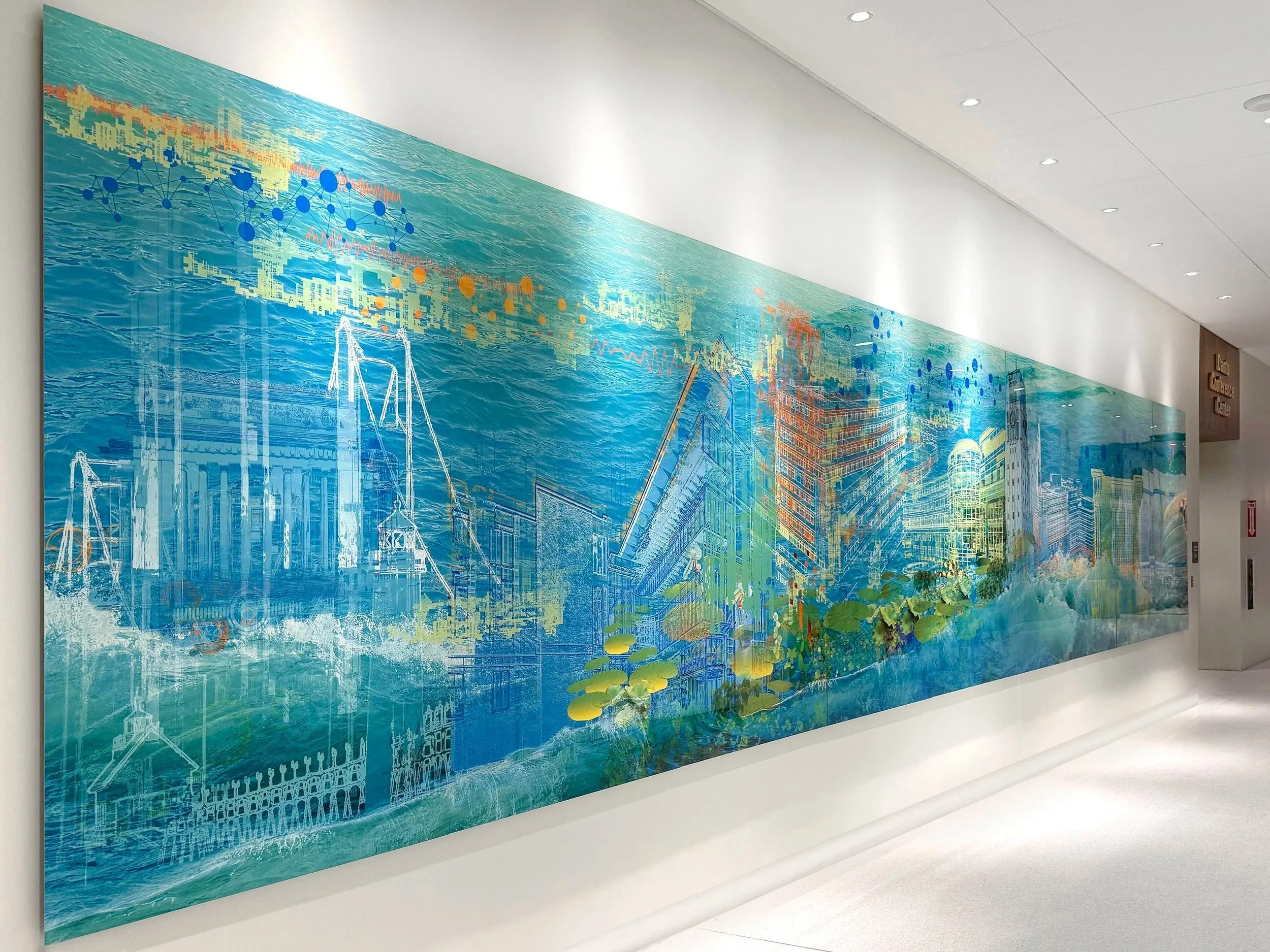
Shuli Sade, Waves, 2025.
Art as Infrastructure in Healthcare Design
At Michigan Medicine, art was not approached as decoration. It was embedded into the conceptual framework of the Pavilion from the beginning.
“To complement the 700,000 sq. ft. D. Dan and Betty Kahn Health Care Pavilion, we wanted an art collection that aligned with our commitment to evidence-based design,” noted Project Director Karen Amman and Interiors Project & Strategy Lead Renee Cruse. “Lydia was instrumental in translating our architectural vision into a healing environment.”
In healthcare settings, this distinction is critical. Research has shown that thoughtfully integrated visual environments can reduce stress, improve patient outcomes, and support staff well-being. Within the Pavilion, the collection was designed to provide moments of pause—spaces where patients, families, and caregivers could briefly step outside the intensity of the clinical experience.
“Our art offers patients and families meaningful moments of respite and distraction when they are often at their most vulnerable,” said Lead Project Manager Corrie Pennington Block.
Lopoukhine approached the project with this outcome in mind: “Our goal was to provide comfort—for people to find beauty and calm in the art, and respite in difficult situations.”
Translating Vision into a Collection
Central to the Pavilion’s design was the concept “Michigan Meets Michigan”—a framework that anchored the collection in both place and identity.
Lopoukhine translated this idea into a visual language that draws from the state’s natural and cultural landscape. Works reference Michigan’s lakes, forests, dunes, and seasonal shifts, while also incorporating the University of Michigan’s maize and blue palette. The result is a collection that feels both grounded and continuous across the building’s many spaces.
“Lydia curated a collection that didn’t just complement those themes, but elevated them—bringing together pieces that reinforce a sense of place, calm, and familiarity,” said Renee Cruse.
For stakeholders, this approach created immediate resonance.
“The art represented a theme that captured the beauty of the state of Michigan—the woods, lakes, sand dunes, flora and fauna,” noted Linda Larin, former COO of Adult Hospitals at Michigan Medicine.
Reflecting on the outcome, Lopoukhine described the collection as “a notable, appreciating, and impactful collection.”
The Advisor as Collaborative Partner
Delivering a project of this scale required a highly structured and collaborative process. Lopoukhine worked closely with an internal art committee, guiding stakeholders through decisions that balanced aesthetics, function, and budget.
Her approach emphasized clarity and efficiency. For each phase, she presented tightly curated options tailored to specific zones within the hospital, allowing decision-makers to focus on quality rather than volume.
“Lydia streamlined our decision-making by arriving at every meeting with high-quality options, making a complex process feel effortless,” said Amman and Cruse.
Lopoukhine underscored the importance of alignment early in the process: “We worked together to clarify objectives, locations, budget, and how art would enhance both the building and the experience.”
Beyond selection, her role extended across the full lifecycle of the project—coordinating with artists, managing logistics, and ensuring that each work was installed in alignment with both design intent and operational realities.
“She had a wonderful eye for excellent art that we could rely on for her opinions of what would work well in various spaces,” added Larin.
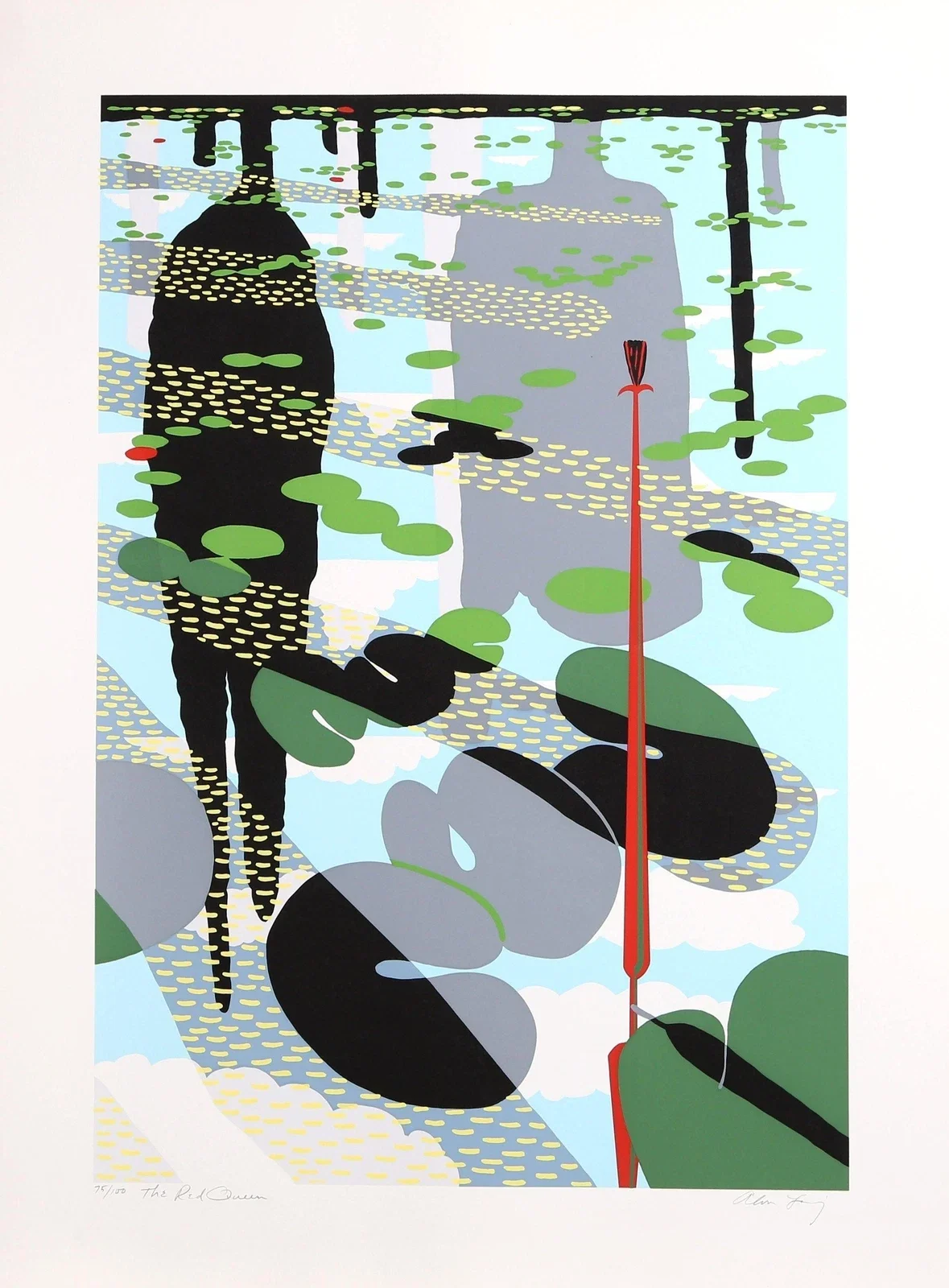
Alvin Loving, Red Queen, 1978.
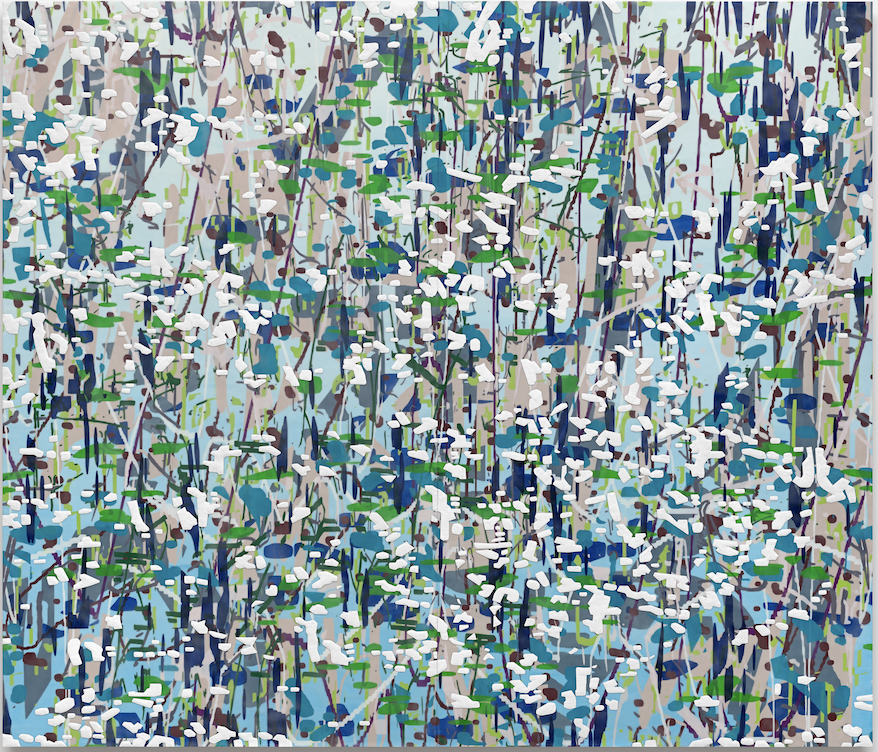
Amy Ellingson, Variation (blue, green, white), 2025.
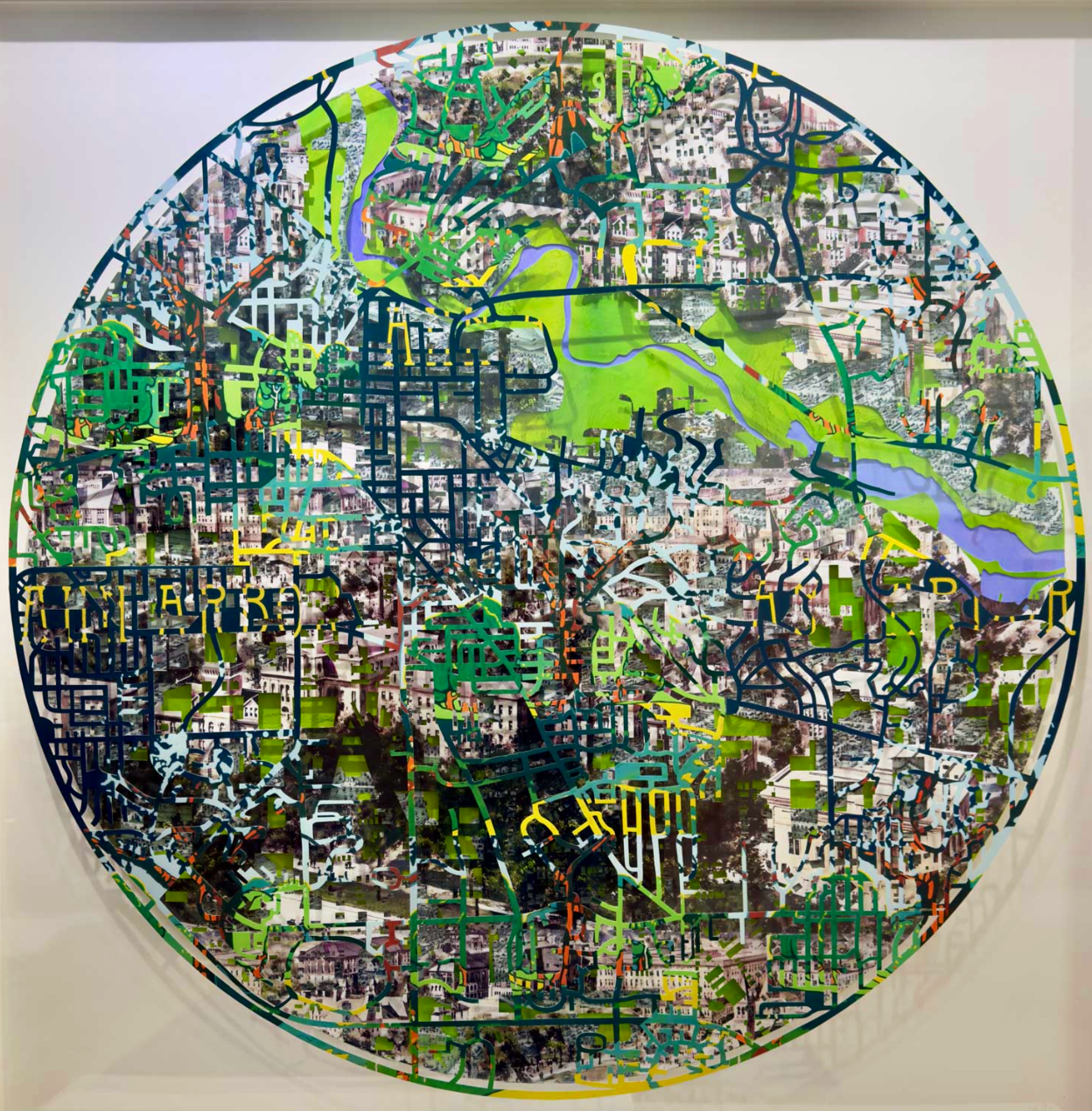
Matthew C. Picton, Ann Arbor, 2025.
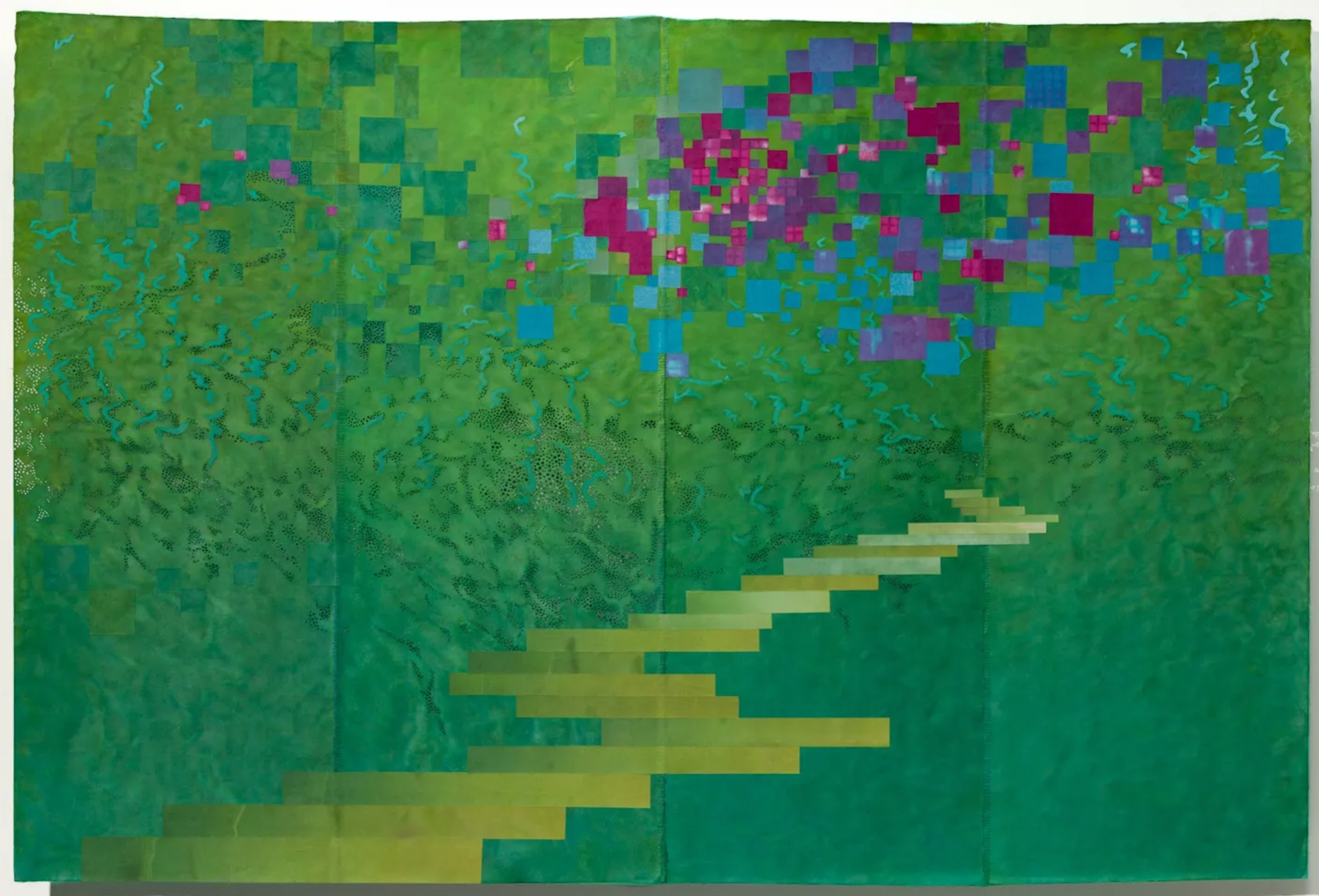
Susan Goethel Campbell, Aegean Narrative No. 4, 2025
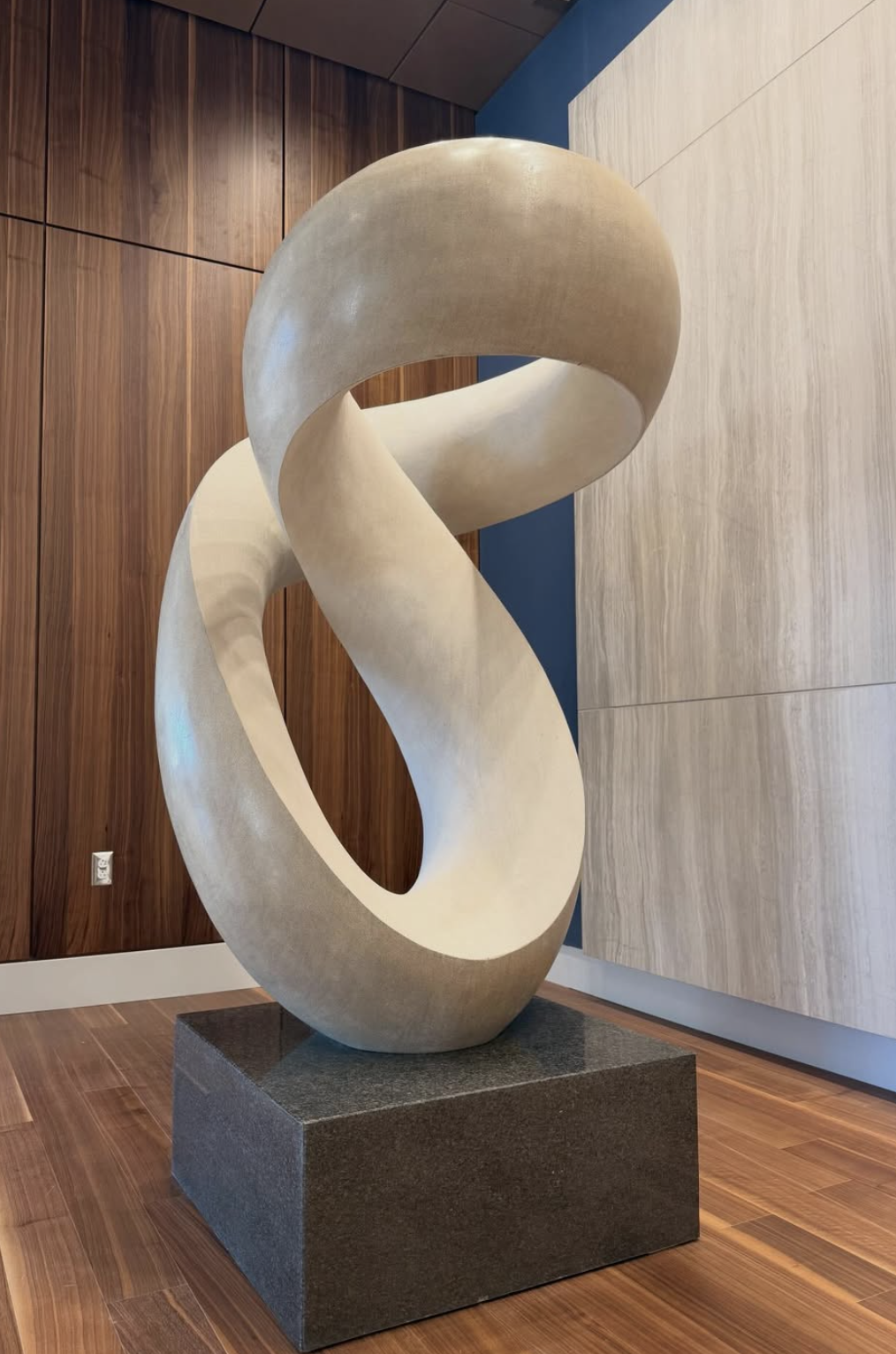
Jason Quigno, Aabiji Mamaajii (Continuous Motion), 2025.
Signature Works and Storytelling in the Pavilion
While the collection operates as a cohesive whole, several works serve as focal points within the Pavilion.
Among them is a monumental 36-foot mural by New York–based artist Shuli Sade. Positioned as a central visual anchor, the work integrates references to Michigan’s architectural landmarks with scientific imagery, including brain wave patterns layered over fluid, oceanic forms.
“The crown jewel of the collection is a monumental 36-foot mural by New York artist Shuli Sade,” noted Amman and Cruse. “It intricately weaves together Michigan’s architectural icons with scientific brain wave patterns layered over soothing ocean swells.”
Works like this function on multiple levels. Visually, they provide scale and impact. Conceptually, they reinforce the Pavilion’s identity—connecting place, research, and human experience. For visitors and staff, they offer moments of discovery that unfold over time.
Art as Emotional Architecture
The Michigan Medicine Pavilion demonstrates how art can shape not only how a building looks, but how it is felt.
“The result is a beautiful, compassionate, striking environment where stakeholders including patients, caregivers and visitors acknowledge that the art is the finishing touch that makes the building a special place,” Lopoukhine reflected.
Through careful planning, collaboration, and execution, she helped transform a large-scale healthcare facility into an environment where art supports healing, reflection, and connection. The result is not simply a collection, but a system—one that integrates seamlessly into the daily rhythms of the space.
More broadly, the project underscores the evolving role of the art advisor. Beyond acquisition, advisors guide clients through research, strategy, and stewardship, ensuring that collections are both conceptually rigorous and operationally sound.
When art is embedded at this level, it becomes part of the building’s emotional architecture—shaping experiences in ways that extend far beyond the visual.
