
Path to Art Advisory: In Memory of Joyce Pomeroy Schwartz
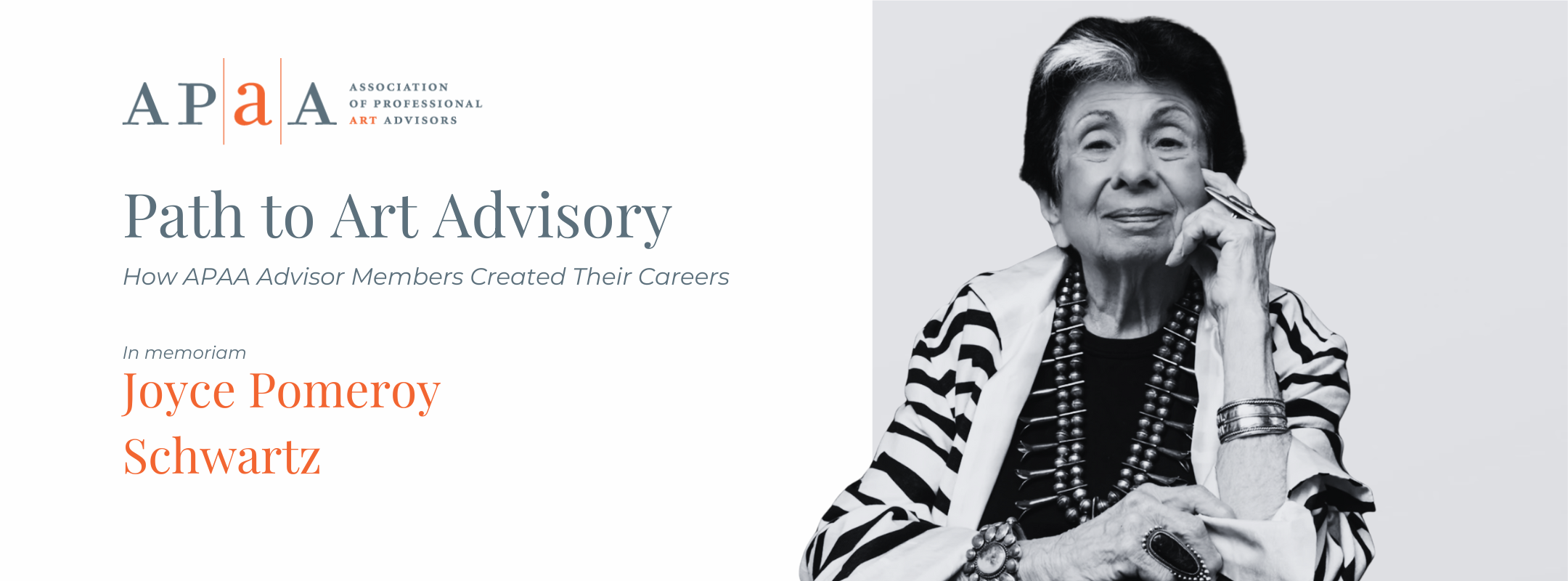
In memory of Joyce Pomeroy Schwartz, a pioneering voice in public art and art advisory. Joyce was a founding member of ArtTable and championed uncompromising standards throughout her distinguished career. We honor her legacy by sharing her story in her own words.
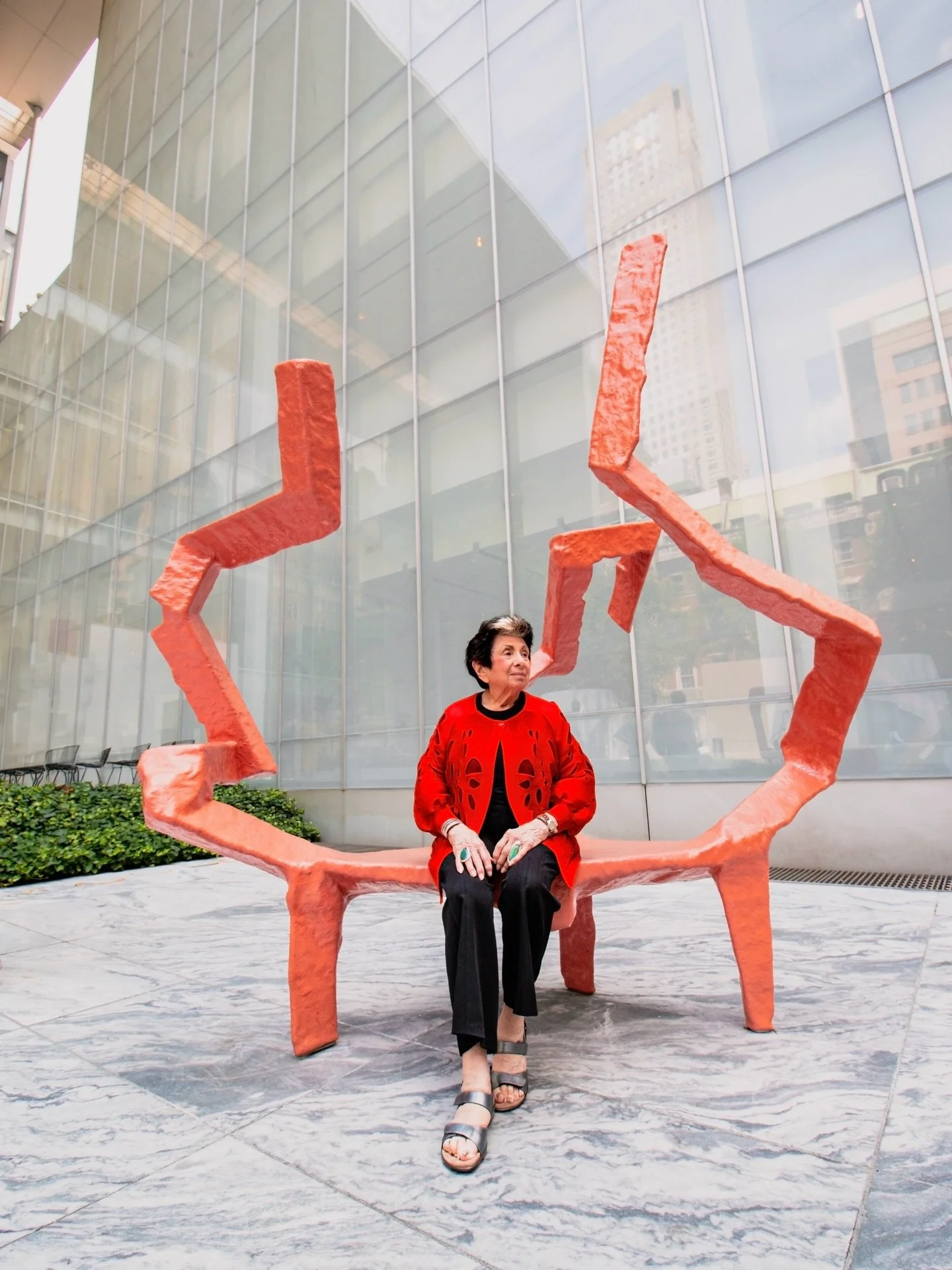
Photo by Alix Schwartz.
Pace Gallery
In 1972, I decided I wanted to work in a gallery. I applied to the three places I wanted to go to. Pace was interested, so I held out for it. Pace interviewed me constantly! Actually, it was over a six-month period. I did get a job at Bloomingdale's in the interim. I had a wonderful time. I found out I was a salesperson. I was there six months until Pace finally said, "Okay, come and work with me."
I think I was hired for a specific purpose. They have two separate businesses—Editions, which was the print business, and the gallery that handled the original work—and they wanted someone to bridge the gap. The first thing Pace said was, "Take three months and look at all the records." So I went through the files. They said, "Let's develop a program and a plan." So we developed a plan to reach architects and corporations.
It was 1973. I went to Arne Glimcher and I said, "You know, I feel that public art is really becoming a major phenomenon in the art world, and a serious one. And we have so many artists who are qualified to do this, that we really should make an effort to go after this kind of business." So he said, "Great. Do it." And that's how I became Director of Commissions. We focused on that, and it became my special thing.
Learning from Louise Nevelson
One of the artists I worked with was Louise Nevelson. She was a dynamo and a wonderful woman. At the time I met her she was in her seventies. There were two things about Louise that for me were very exciting. One was the fact that she understood the architectural context. So she is the quintessential public artist, and she taught me what makes a public artist and a public work of art.
We would do a show in the gallery and I remember saying to her, "Louise, this is the best work you have ever done. This is the most exciting show." And she said, "Darling, wait until the next one. I'm already thinking about it." Once she had done something…it was done, finished, it was not her concern. She always looked ahead. She lived until eighty-seven or eighty-eight, worked productively, traveled until the very end, did major public art projects, and always had this energy.
The other thing was the fact that as old as she was, she was always looking ahead and dealing with the future. She was productive into her eighties. As long as your mind works, you can continue thinking and doing and making things. It was Louise who made me realize that that is the way to function in life. Not to think that when you reach a certain age that you are a senior citizen, so you have to do nothing with yourself. Retirement is something artists never do.
Growing Up with Art in Brooklyn
I grew up in Brooklyn. My father was an interior designer. I have a brother who is a prominent architect here in New York. We are very close. He has been a big influence in terms of pointing me towards the architecture of context, which is what my work is about.
I studied English Literature and History and Philosophy in college, and I painted. I wanted to be an art major, but my parents discouraged me because then the artist was the bohemian, living in Greenwich Village, never getting married. So I was a good little girl.
I was not a good artist, by the way. I never could get over the influence of other things I was seeing to make my own statement. I wanted to live in a world of art. It's sort of an old saw that if you can't do it, you teach or whatever. So I thought of becoming an art teacher, and somehow got diverted.
The Photography Gallery Years
Things happen by accident. In 1967, a friend of mine said, "We have a space, and we would like to open a little art gallery." I had gone to school with a lot of people who were working in photography, and I was excited about it. So we opened a gallery specializing in fine art photography called The Photographer's Gallery. Because there was no other one in the city at that time, we could get any artist I wanted. We represented Andre Kertesz, Brassai, and Weston.
I liked the idea of putting two people together that would inform the work. Showing two different artists tells you something more about each of the artists. The juxtaposition raises questions and issues. The first was Ray Metzker and Paul Caponigro. Ray Metzker was an urban artist, who at the time was photographing the subways and streets of Chicago. Paul Caponigro was a follower of Minor White and Ansel Adams, and did nature photography. They loved the idea. It was a superior show.
There was a man, Jacob Deshin, who wrote the photography column in The New York Times. The first show I had, he came, reviewed it, and said, "I'm thrilled with what you are doing!" I got calls from all over the world from people who wanted to buy photography and never knew where to get it. I felt the medium was going to be moving on rapidly, as it has.
The gallery closed in 1971. It needed expansion, and I was unwilling to put the money into it.
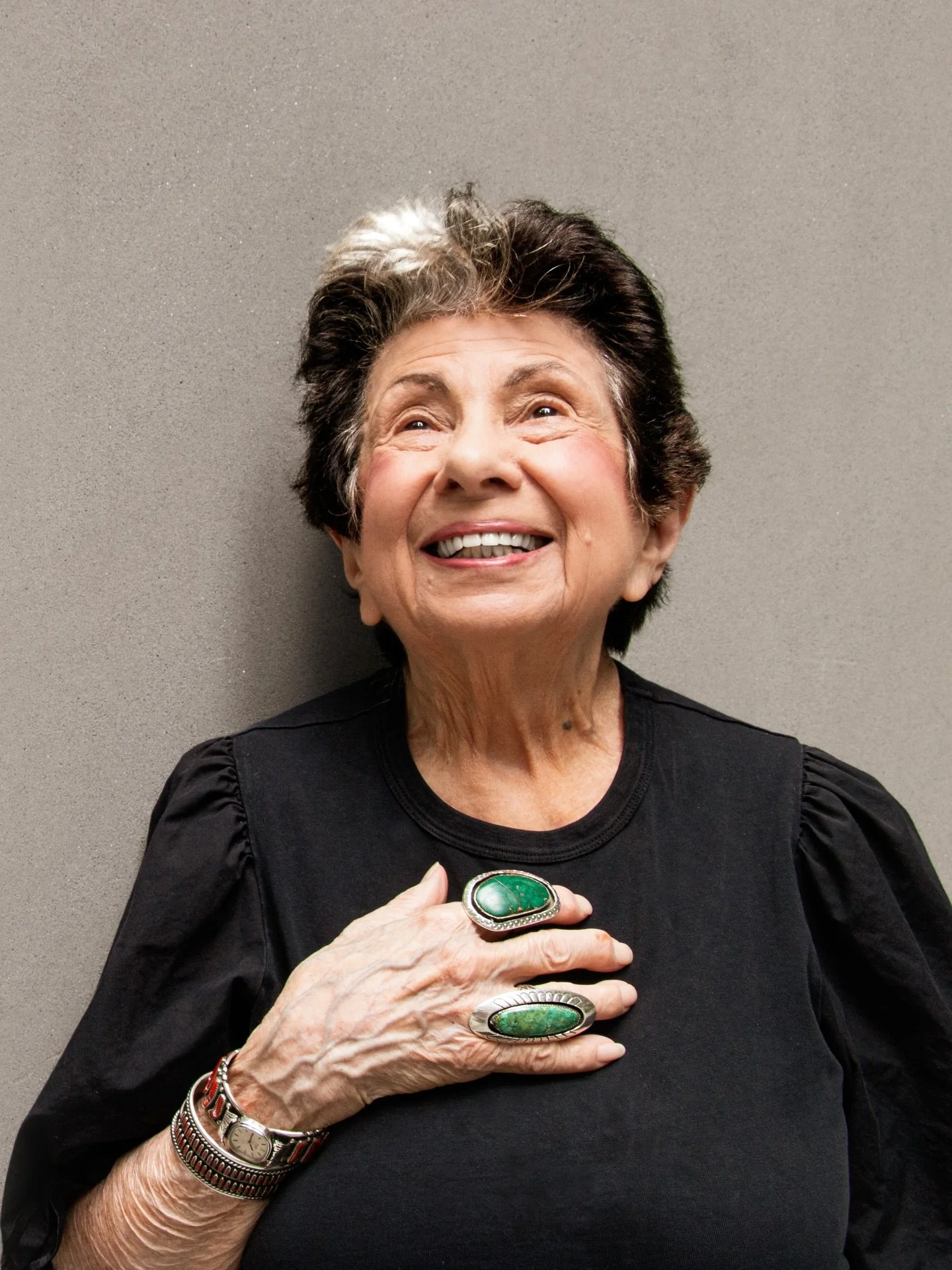
Photo by Alix Schwartz.
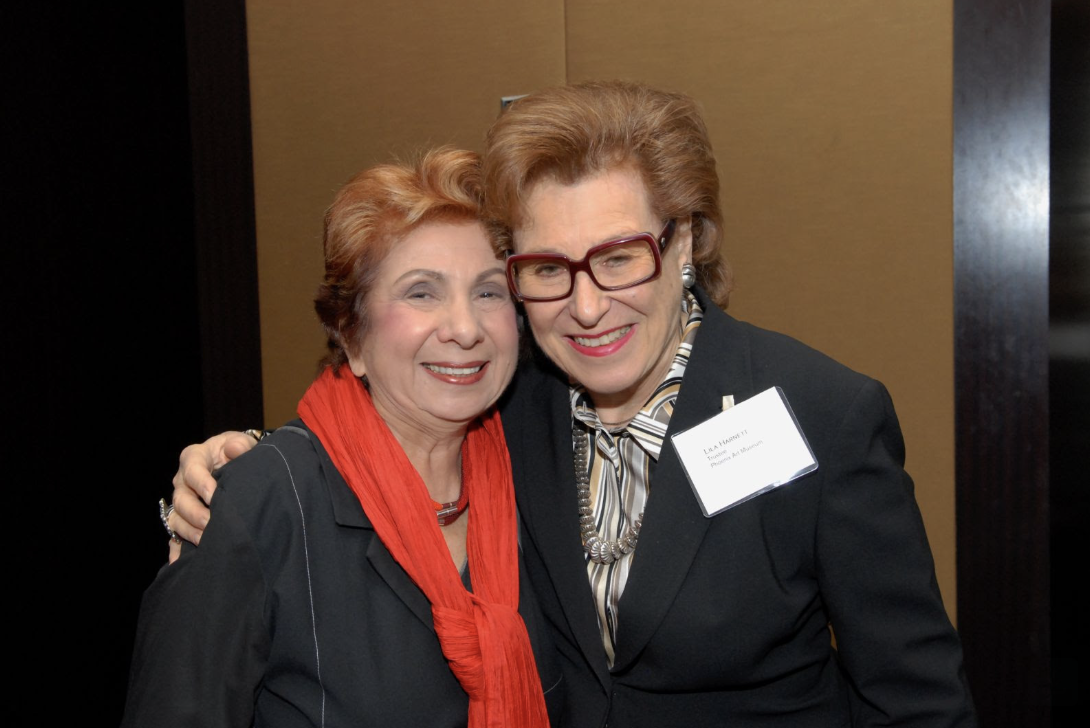
Joyce Pomeroy Schwartz with Lila Harnett, ArtTable Founder, at the 2009 Annual Benefit and Award Ceremony. Photo by Elsa Ruiz.
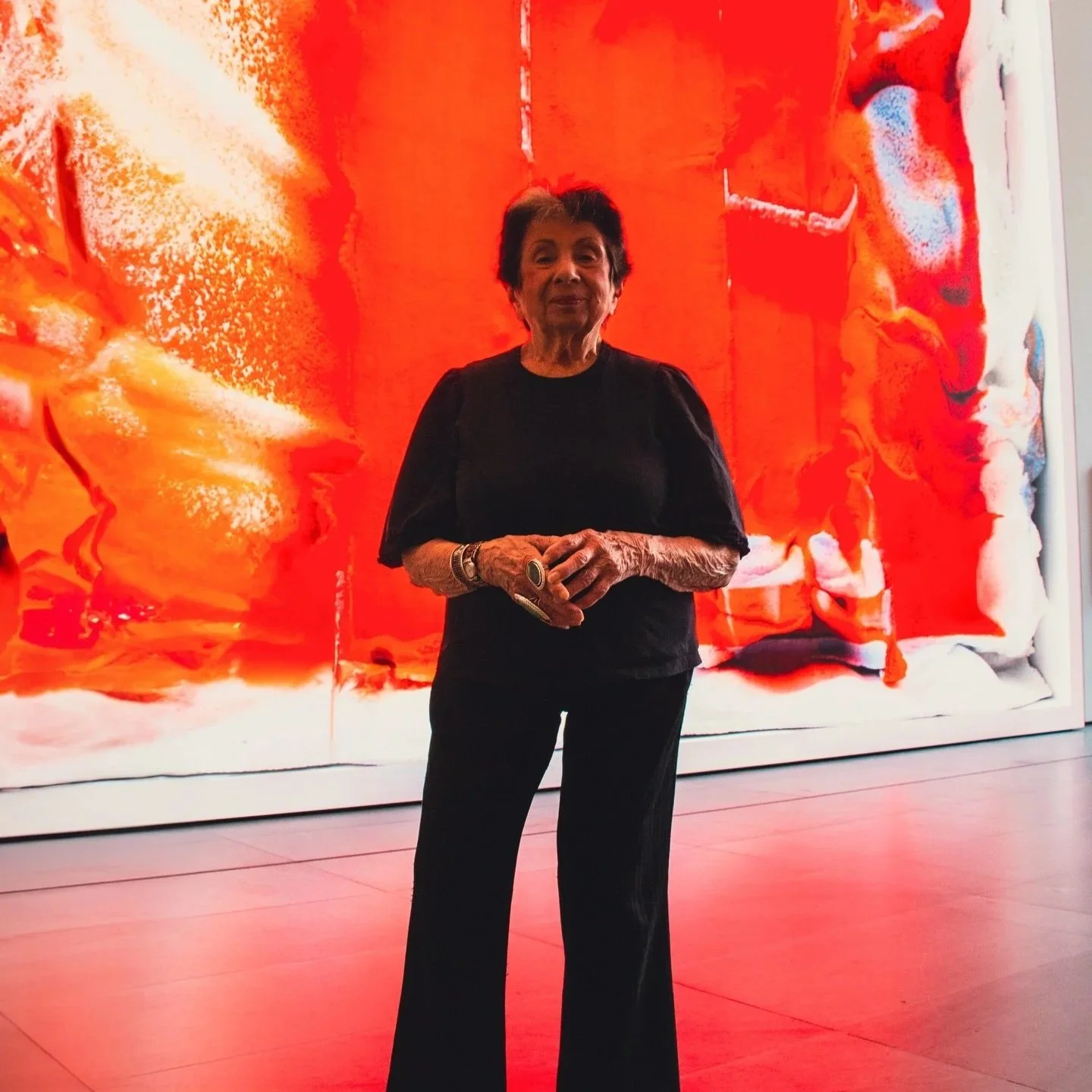
Photo by Alix Schwartz.
Joyce’s Legacy
I think life is a growth experience. One of the wonderful things about being in the art business is that there are many aspects to it. So if you are open, you can move into new areas. Public art was drying up for a year or two because projects were not happening. So I moved into curating. I curate shows of large-scale works of art. So it's still about public art, but it's a slightly different aspect.
I feel that there is a need for a focus on outstanding public art, of the past and the future. To set standards for the field, that's really my goal. You always have to set standards for what you are doing, and then keep to them. I guess that's my philosophy of life.
Independent Practice
In 1981, I left Pace Gallery. The reason I left was simply because I was limited to the artists represented there, and I began to go places and think about other artists I would like to recommend. I still work with their artists and we have a relationship. When I think back upon my years there, it was a learning experience. But it was time.
I finally decided that I liked public art and I wanted to stay with it. I had found my niche. It is much more satisfying being able to think about any artist. I'm not bound by having to focus on the artists of a gallery, so I'm not limited. I'm a free agent, and that's the definition of a consultant.
In general, I'm very proud of the fact that I have been able to make a business out of being uncompromising in the selection of artists. I haven't given in to the marketplace. I probably haven't made as much money. But ultimately, life is not about how much money you have in the bank, it's how well you live it.
The issue is everybody wants the best that they can possibly get, and it's our role as professionals to see that they get it. I don't know it all. I use committees, and I listen to artists whom I respect. You learn more from them than you do from critics or other art professionals. They are the ultimate art professionals. But finally, if I am hired as a consultant, the responsibility is mine.
ArtTable and Women in the Art World
In 1979, I was involved in founding a group called ArtTable. I was working at Pace, and I had gotten an interview for Louise Nevelson with a woman name Lila Harnett, who was an art critic for Cue Magazine. Her husband, who was in politics, had a group of men that would have lunch together. They would talk about professional issues. And she thought, wouldn't it be a good idea for the art world to do this. Women who were interested in the same thing, but in different disciplines, should talk together.
It involved about seven or eight women. The idea was to keep it that, a close-knit group of networking women. It is now so large that it has over seven hundred women across the country, with several branches. I was on the first board.
As far as women in the art world structure, traditionally they have opened galleries. There are people like Virginia Zabriskie, Grace Borgenicht, Betty Parsons, Martha Jackson, and of course years ago Edith Halpert—who had Grand Central Galleries. They were women who started galleries and were a force for contemporary art. They have had an outstanding role in developing the whole art system here in America. And I think that has not been pointed out enough.
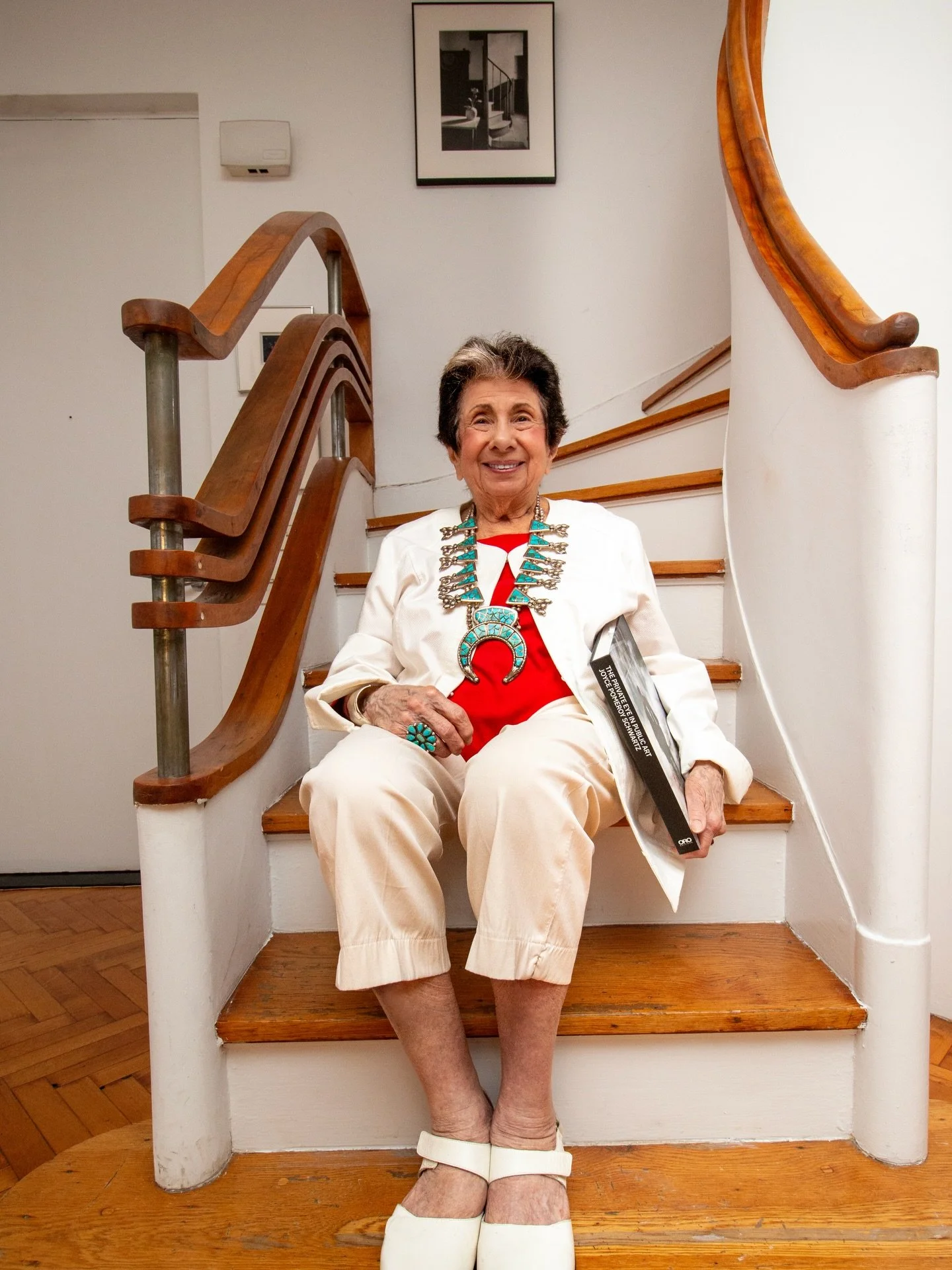
Photo by Alix Schwartz.
